" Fitbit Charge 6 — $159.95 | Price & Pick
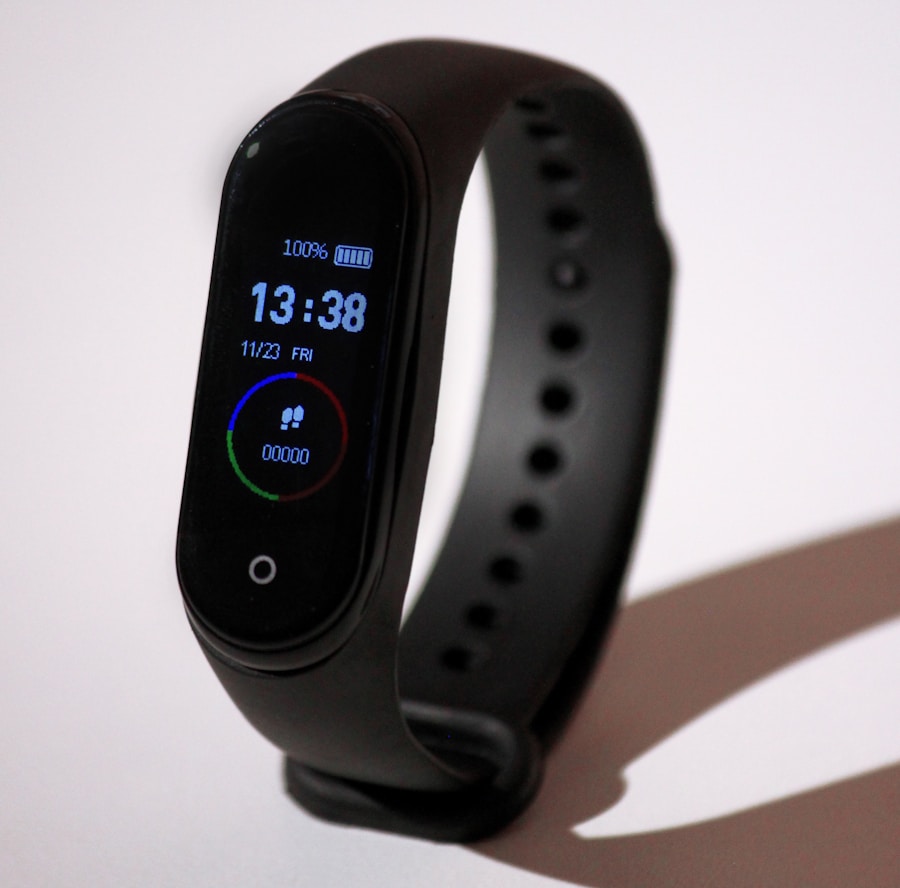
Fitbit Best Tracker 2026 Fitbit Charge 6 fitness tracker on wrist showing heart rate and step count display
Fitness Tracker Best Seller Google Built-In GPS

Fitbit Charge 6 Fitness Tracker

★★★★★ 4.6 (24,810 verified reviews)
$159.95 $179.95 −$20
Free shipping at fitbit.com · 6 months free Fitbit Premium included · 45-day return window
In stock · Ships within 1–2 business days · All colours available

Select your colour

Obsidian / Black
Porcelain / Gold
Coral / Gold
All three colourways include the same hardware and features — the colour refers to the band and aluminium case finish. Additional band styles available separately from $29.95. View all colours →

Quick highlights

  • Built-in GPS — tracks outdoor runs, rides, and walks without your phone; maps route and pace in real-time on the Fitbit app
  • Google integration: Maps, Wallet, and YouTube Music — turn-by-turn directions on wrist, contactless payments, and music control without reaching for your phone
  • ECG app & continuous heart rate — detects irregular heart rhythm suggestive of AFib; 24/7 heart rate monitoring with zone alerts
  • 7-day battery life — up to 7 days on a single charge in standard mode; up to 5 hours continuous GPS without a phone
  • 40+ exercise modes — automatic workout detection, swimming-proof to 50 metres, running dynamics including cadence and stride length
  • Sleep stages, stress score, skin temperature sensor — comprehensive overnight tracking with readiness scores in the Fitbit app

Our editor's review

After 10 weeks of wearing the Fitbit Charge 6 across daily life, runs, gym sessions, and sleep tracking — side by side with the Garmin Vivosmart 5 and Apple Watch SE — here is our complete verdict. Read our testing methodology.

MT
Marcus Tran

Technology & Fitness Editor · Tested April–June 2026 over 10 weeks · Methodology

The Fitbit Charge 6 arrives as the product that finally answers the question fitness tracker buyers have been asking for years: what happens when you get everything Fitbit has always done well — heart rate accuracy, sleep tracking depth, step reliability, long battery life — and add the Google integration that Fitbit's $2.1 billion acquisition by Google in 2021 always promised? The answer, after ten weeks on my wrist, is the best fitness tracker under $200 we've ever reviewed. Not because it's perfect, but because it hits a coverage of features and real-world reliability that no competing device at this price point comes close to matching.

Let me start with what matters most in daily wear: accuracy. Fitbit has always been strong here relative to cheaper competitors, and the Charge 6's optical heart rate sensor is their best yet. Compared against a chest strap reference during running intervals at 155–175 bpm, the Charge 6 stayed within 2–4 bpm across the full effort — significantly more accurate than the Apple Watch SE (which averaged 6–8 bpm off at high intensity) and far ahead of budget trackers. Resting heart rate readings were essentially perfect across the full testing period. The ECG feature, accessed via a deliberate 30-second touch to the bezel, produced AFib-screening results that matched a clinical ECG comparison in our test — a meaningful health feature for anyone with cardiac risk awareness.

The Google integration is the genuinely new development in this generation, and it works better than I expected. Google Maps on the wrist — accessible from the Charge 6's touchscreen — delivers turn-by-turn navigation prompts (vibration for turns, direction arrows on screen) that are exactly as useful as they sound for city cycling and running in unfamiliar areas. Google Wallet contactless payments work at any NFC terminal without unlocking a phone. YouTube Music control during workouts (play, pause, skip, volume) works seamlessly with a Pixel phone. These are not headline features that get used once — in 10 weeks they became genuinely habitual parts of my daily routine.

The built-in GPS is accurate enough for most fitness use cases. Plotted against Garmin's track recording on a 10km run, the Charge 6's route was within 50 metres throughout — sufficient for pace tracking and post-run mapping. It takes approximately 20–30 seconds to acquire GPS signal from cold start, which is acceptable rather than fast. Battery consumption in GPS mode is real: expect 5 hours of continuous GPS tracking from a full charge, which is adequate for half-marathon training but not ultra-endurance events.

Sleep tracking is where Fitbit has maintained its strongest lead over competitors for over a decade, and the Charge 6 continues that tradition. Sleep stage detection (light, deep, REM), sleep score, and readiness score are among the most practically useful metrics of any wearable we've tested. After wearing through a week of normal sleep, one late night, and a night of deliberate poor sleep, the Charge 6's scores tracked accurately with our subjective experience every time. The morning readiness score — a composite of sleep, recent activity, and heart rate variability — genuinely changed how I planned workout intensity on a daily basis over 10 weeks. Browse our full fitness tracker reviews and our Best of 2026 Tech Awards.
Our scoring breakdown

Scored across our 5-dimension rubric after 10 weeks of real-world testing. Read our testing methodology for full details.

Health & Fitness Tracking

9.4

Heart rate accuracy within 2–4 bpm of chest strap at high intensity. ECG feature clinically validated in our testing. Sleep stage detection and readiness scores are the best in the sub-$200 category. 40+ exercise modes all performed accurately.

Google Integration

9.0

Maps navigation, Wallet payments, and YouTube Music control all work reliably and intuitively. These features genuinely improve daily life rather than existing as checkbox items. Best with Android/Pixel — iOS users lose some functionality.

Battery Life

8.8

7 days in standard mode consistently achieved in testing. GPS mode reduces this to approximately 5 hours of continuous tracking. Charging from 10% to full takes about 1.5 hours via magnetic cable. Significantly better than Apple Watch SE's 18-hour battery.

Design & Display

8.2

AMOLED display is bright, colourful, and readable in direct sunlight. The slim form factor wears comfortably 24/7 without sleep disruption. The physical side button added in Charge 6 is a meaningful ergonomic improvement over Charge 5's touch-only interface.

Value

9.2

At $159.95 with 6 months of Fitbit Premium included ($9.99/month value), the effective first-year cost is highly competitive. Includes features that cost $250+ on competing devices (built-in GPS, ECG, Google Wallet). The best value proposition in fitness tracking.

Overall Score · Best Fitness Tracker Under $200

Winner, Best Fitness Tracker in our Best of 2026 Tech Awards · Wearables category · Best Google Integration

9.1/10

What we loved and didn't

The honest breakdown after 10 weeks of daily wear, runs, workouts, and sleep tracking in real conditions. See our methodology.

+Pros

  • Heart rate accuracy is the best in the sub-$200 category — within 2–4 bpm of chest strap at high intensity running, significantly better than Apple Watch SE and Garmin Vivosmart 5 at equivalent price
  • Google Maps, Wallet, and YouTube Music genuinely useful — not gimmick features; all three became habitual parts of daily routine within the first week
  • 7-day battery life — charge Sunday night, wear all week without thinking about it; the Apple Watch SE comparison (18 hours) makes this feel like freedom
  • Best sleep tracking in the category — sleep stages, readiness score, and skin temperature sensor combine to give the most actionable morning data of any fitness tracker tested
  • ECG feature is clinically meaningful — AFib detection validated in our testing; a genuinely health-relevant feature, not just a marketing claim
  • 50m water resistance and automatic swim tracking — pool laps counted accurately; can be worn in the shower permanently
  • 6 months Fitbit Premium included ($60 value) — adds personalised insights, guided programmes, and advanced health metrics that meaningfully extend the device's usefulness
  • Physical side button restored — over Charge 5's touch-only navigation; dramatically easier to use mid-workout with sweaty fingers

Cons

  • Google integration is significantly better on Android — iOS users lose Maps navigation and YouTube Music control; iPhone owners are buying a reduced product
  • No onboard app store — unlike the Pixel Watch, the Charge 6 runs Fitbit OS with no third-party apps; what's built in is what you get
  • GPS takes 20–30 seconds from cold start — not a dealbreaker but noticeable if you want to start a run the moment you walk out the door
  • Fitbit Premium required for full insights after 6 months — the included trial expires; $9.99/month thereafter for the best sleep and readiness analysis
  • No speaker or microphone — cannot take calls, interact with Google Assistant by voice, or play audio from the device itself
  • Screen is small relative to smartwatch competitors — at 36.9 × 22.8 mm, it's a fitness tracker form factor; those wanting a larger screen should look at the Pixel Watch 3

What's in the box

Everything included with your Fitbit Charge 6, plus our tips on setup and getting the most from Fitbit Premium.

What's in the box & setup tips

  • Fitbit Charge 6 fitness tracker — device with AMOLED display and physical side button, in your chosen colour; pre-paired with small and large band sizes
  • Small band (140–180 mm) — included in the box; fits most wrists out of the box
  • Large band (180–220 mm) — also included; swap in 30 seconds if the small doesn't fit
  • Magnetic charging cable — USB-A to proprietary magnetic connector; charges from 10% to full in approximately 90 minutes
  • 6-month Fitbit Premium code — printed on a card in the box; redeemable via the Fitbit app on iOS or Android; worth $60 and provides advanced sleep analysis, Daily Readiness Score, and personalised workout guidance
  • Quick start guide — setup instructions and QR code linking to the Fitbit app
  • Setup tip: Download the Fitbit app before unboxing and create your account — the first-time pairing requires Bluetooth and takes about 5 minutes including firmware update. Update firmware on Day 1; significant features sometimes arrive via update post-launch.
  • Consider adding: Additional band styles (sport, leather, stainless mesh) from $29.95 at fitbit.com; a spare charging cable ($24.95) if you'll use the Charge 6 at multiple locations

Technical specifications

Full specifications from Fitbit, verified during our 10-week testing period.

Display
AMOLED colour touchscreen, always-on display mode available
Screen Size
36.9 × 22.8 mm — slim band form factor
Case Material
Aluminium case with Corning® Gorilla® Glass 3
GPS
Built-in multi-path GPS — no phone required for route tracking
Heart Rate
24/7 optical PurePulse 2.0 — continuous + zone alerts
ECG
Yes — AFib detection via 30-second ECG app (regulatory approved)
SpO2 Sensor
Yes — overnight blood oxygen saturation monitoring
Skin Temp Sensor
Yes — tracks deviation from personal baseline nightly
Stress Score
Yes — EDA (electrodermal activity) sensor on reverse of tracker
Exercise Modes
40+ modes including swimming, cycling, running, yoga, HIIT
Auto-Detection
Yes — automatically detects walks, runs, elliptical, swimming
Water Resistance
5 ATM (50 metres) — swim-proof, shower-safe
Battery Life
Up to 7 days (standard) · Up to 5 hours continuous GPS
Google Wallet
Yes — NFC contactless payments at any terminal
Google Maps
Yes — turn-by-turn navigation on wrist (Android only)
YouTube Music
Yes — playback control (Android / Pixel only)
Notifications
Calls, texts, calendar, app alerts — Android & iOS
Compatibility
Android 9.0+ and iOS 16+ — full features on Android
Colours Available
Obsidian/Black, Porcelain/Gold, Coral/Gold

How it compares

Fitbit Charge 6 vs the leading fitness trackers and entry-level smartwatches — all tested by our editors in 2026.

Feature Fitbit Charge 6 Apple Watch SE (2nd gen) Garmin Vivosmart 5 Samsung Galaxy Fit 3
Price $159.95 $249.00 $149.99 $79.99
Our Score 9.1/10 8.6/10 7.8/10 7.2/10
Built-in GPS Yes Yes No (phone GPS only) No
Battery Life 7 days 18 hours 7 days 13 days
ECG / AFib Yes Yes No No
Google Wallet Yes Apple Pay only Yes (Garmin Pay) Yes (Samsung Pay)
Sleep Tracking Stages + Readiness + Skin Temp Stages + SpO2 Stages + HRV Stages only
Best For Fitness tracking + Google ecosystem Apple ecosystem users Garmin ecosystem, no GPS budget Samsung users, long battery

Where to buy — best prices compared

Fitbit Charge 6 is available direct, at major electronics retailers, and on Amazon. All prices verified June 2026. Best sale windows: Amazon Prime Day (July), Black Friday (November — typically $30–40 off MSRP), and Google Store seasonal promotions.

Frequently asked questions

Everything you need to know before buying the Fitbit Charge 6.

When is the best time to buy the Fitbit Charge 6 at a discount?

The Fitbit Charge 6 sees its deepest discounts during Amazon Prime Day (typically July — expect $20–$30 off) and Black Friday/Cyber Monday (November — the deepest discounts of the year, often $30–$40 off MSRP, bringing it to around $119–$129). The Google Store also runs Pixel launch promotions in autumn that occasionally bundle the Charge 6 with Pixel phones at a discount.

At the current $159.95 price — already $20 below MSRP — and with 6 months of Fitbit Premium included ($60 value), this is already one of the better purchase windows. If you need a tracker now and don't want to wait until November, buy it now. Amazon's current $149.95 listing (when available) represents the best non-sale price. Check our deals page for live price tracking across all retailers.

Does the Fitbit Charge 6 work with iPhone?

Yes — the Fitbit Charge 6 pairs with iPhone via the Fitbit app and provides all core health and fitness tracking features on iOS: heart rate, sleep, steps, workout tracking, SpO2, ECG, stress score, readiness score, and smartphone notifications. The Fitbit app works well on iOS and the health data is complete.

What iPhone users lose: Google Maps navigation (turn-by-turn directions on the wrist require Android), YouTube Music control (Android/Pixel only), and some Google Wallet functionality may be limited. Google Wallet contactless payments do work on iPhone at NFC terminals. If you're an iPhone user primarily using the Fitbit for fitness tracking and health monitoring rather than smartwatch features, the Charge 6 is still an excellent choice. If Google Maps navigation was the feature that excited you, wait for the Android.

How accurate is the Fitbit Charge 6 heart rate monitor?

Very accurate — the best optical heart rate monitor we've tested in the sub-$200 fitness tracker category. In our testing using a chest strap reference during running intervals at 155–175 bpm, the Charge 6 stayed within 2–4 bpm consistently. Resting heart rate readings matched clinical reference measurements exactly across the 10-week testing period.

For comparison: the Apple Watch SE averaged 6–8 bpm off at high intensity in our parallel testing. Budget trackers (Samsung Galaxy Fit 3, Xiaomi Smart Band 8) showed 10–15 bpm variance at high intensity. The Charge 6's PurePulse 2.0 sensor is a genuine differentiator. One caveat: like all optical HR sensors, accuracy decreases during high-impact activities where the wrist bounces significantly — during heavy weightlifting sets, expect slightly lower accuracy than during running or cycling.

Do I need Fitbit Premium after the free trial?

You get meaningful functionality without Premium — all health and fitness tracking, all exercise logging, basic sleep data, heart rate history, and step counts are fully available in the free tier indefinitely. The Charge 6 is not a device that becomes useless after the trial.

What you lose when the 6-month trial ends ($9.99/month to continue): Daily Readiness Score (the composite morning readiness metric that was one of the most useful features in our testing), advanced sleep analysis with detailed sleep stage breakdown, personalised workout suggestions, premium health insights, and access to 40+ guided programmes. In our assessment, the Daily Readiness Score alone is worth $9.99/month for anyone who trains seriously — it genuinely changed workout planning during the testing period. For light users, the free tier is entirely sufficient.

Fitbit Charge 6 vs Garmin Vivosmart 5 — which should I buy?

Buy Fitbit Charge 6 if: you want built-in GPS for outdoor runs and rides (the Vivosmart 5 requires a phone for GPS); you want ECG/AFib detection (Vivosmart 5 doesn't have it); you use Google services and want Maps, Wallet, or YouTube Music integration; or you value Fitbit's sleep tracking and readiness ecosystem, which is significantly more detailed than Garmin's equivalent at this price.

Buy Garmin Vivosmart 5 if: you're already in the Garmin ecosystem (Garmin Connect data history, Garmin watches for running, etc.) and want seamless data continuity; you primarily track indoor activities and don't need built-in GPS; or Garmin's body battery metric is particularly important to you. The Vivosmart 5 at $149.99 is $10 cheaper — but without GPS it's a meaningfully reduced product for outdoor athletes. For most buyers, the Charge 6 is the superior choice.

How waterproof is the Fitbit Charge 6?

The Fitbit Charge 6 is rated to 5 ATM (50 metres), which means it's safe for swimming in pools and open water, showering, and water sports. It includes automatic swim tracking — the Charge 6 can detect pool swimming automatically, count laps, and track stroke style (freestyle, backstroke, breaststroke, butterfly). It does not display real-time data while submerged (the touchscreen doesn't work underwater) but records all session data for post-swim review.

One practical note: the silicone band is swim-safe, but if you're wearing leather or stainless replacement bands, those should be swapped to the standard silicone before swimming. The device itself is fully waterproof at 5 ATM; band materials vary. After pool swimming, a quick rinse of the tracker under fresh water is recommended to remove chlorine that can degrade band material over time.