✨ Memorial Day Mega Sale is LIVE β€” Up to 70% off across 200+ brands. Shop the deals β†’

Marathon Training Gear: The Complete Beginner's Guide

From your first 5K to crossing 26.2, here's the gear that will actually help β€” tested across Nike, Hoka, ASICS, Garmin, Lululemon, and Goodr over 18 weeks. Plus: our hard-won advice on the dreaded chafing question.

JT
Jordan Taylor
Head of Testing Lab Β· 5x marathon finisher Β· 8 years testing running gear
487 comments 19.4k shares
πŸƒπŸƒ 350+ Miles Tested18 weeks, 5 brands, one slowly-built kit β€” and the gear that genuinely matters from your first 5K to race day

The marathon-gear industry has done an excellent job convincing first-time runners they need $2,000 of gear before lacing up. Carbon-plated super shoes, GPS sportswatches, hydration vests, compression sleeves, foam rollers, recovery boots, electrolyte mixes, fuel gels, anti-chafe sticks, KT tape, foam earbuds, light-up vests… The list never ends.

The honest truth, after coaching 40+ first-time marathoners and finishing five myself: you need shockingly little gear to run a marathon. Most "essential" items are actively unhelpful for beginners. Here's what genuinely matters across 18 weeks of training, broken down by phase β€” from your first 5K to crossing 26.2.

I tested gear from Nike, Hoka, ASICS, Brooks, New Balance, On Running, Lululemon, Garmin, Coros, Goodr, and Gore-Tex across 350+ training miles. Below: the 8 gear categories that actually matter, plus our hard-won chafing advice. Browse current running gear deals on our deals page, see our Fitness category, or compare specs on our comparison tool.

⭐ Editor's TL;DR

Bare minimum: Brooks Ghost 16 ($140) + Balega Hidden Comfort socks ($14) + Lululemon Pace Breaker shorts ($68) + Body Glide ($8). Total: $230. Add a Garmin Forerunner 265 ($450) only after your first 5K.

Everything else is optional and can wait until you hit the 13-mile training runs. The honest truth: most marathon gear sales are aimed at people who are nervous, not people who actually need the gear. Browse current running gear deals on our deals page.

Browse our fitness reviews β†’

The 4 distance milestones

Different distances need different gear. Buying everything before your first 5K is the most common (and most expensive) beginner mistake. The Runner's World training plan philosophy I follow: buy gear as your distances justify it.
πŸ₯‡
5K
Weeks 1-6
Just shoes + socks + comfortable clothes. Don't overbuy. Brooks, Hoka good entry points.
πŸ₯ˆ
10K
Weeks 7-10
Add technical socks + better-fitting shorts. Anti-chafe stick now mandatory. Watch optional.
πŸ₯‰
Half Marathon
Weeks 11-14
GPS watch becomes useful. Hydration plan needed. First fuel testing. Garmin Forerunner tier.
πŸ†
Marathon Β· 26.2
Weeks 15-18
Carbon-plated race shoes optional. Hydration vest if no aid stations. Fueling strategy critical.

How we actually tested 350+ miles of marathon gear

I followed a standard 18-week marathon training plan from Runner's World, logging 350+ miles across road, trail, treadmill, and one half-marathon race. Every piece of gear got tested in three conditions: cold (40Β°F+ rain), moderate (60-70Β°F), and hot (85Β°F+ humid). I rotated 6 different shoe pairs to track wear patterns and recovery feel after long runs.

For shoes, I tracked cushion fatigue over 200-mile life cycles, gait shifts using DorsaVi motion-capture analysis, and post-run muscle soreness via daily 1-10 scales. For watches and trackers, I cross-referenced GPS accuracy against a Polar H10 chest strap and a marked 5-mile loop. For apparel, I logged chafing incidents and post-wash durability across 30+ wash cycles. Read more about our testing methodology here. Browse our Fitness category.

18
Weeks of training
350+
Miles logged
6
Shoe pairs tested
8
Gear categories
01
βœ“ Essential

Running shoes

The only thing you actually need. Get this right; everything else is negotiable.

If you only buy one piece of gear, this is it. The right pair of running shoes prevents 80% of beginner injuries β€” the wrong pair causes most of them. Spend $130-160 on a quality daily trainer; skip the carbon-plated race shoes until you've finished your first half marathon.

For first-time marathoners, I recommend a neutral cushioned daily trainer: the Brooks Ghost 16 ($140), Hoka Clifton 9 ($145), or ASICS Gel-Cumulus 26 ($140). All three are forgiving, durable for 300-400 miles, and stable enough that beginners don't need extra "stability" shoes. Nike Pegasus 41 ($140) is the well-rounded fourth option.

For race day specifically (not training), the Nike Vaporfly 3 ($260) genuinely makes you faster β€” peer-reviewed studies show 2-4% efficiency improvement from the carbon plate and ZoomX foam. Adidas Adios Pro 3 and Saucony Endorphin Pro 3 are credible alternatives. But these are race-day shoes only β€” they wear out fast and don't replace a daily trainer.

⭐ Editor's Pick β€” Daily Trainer
Brooks Ghost 16

The most universally-loved beginner marathon shoe. Plush DNA Loft v3 cushioning, 12mm heel-to-toe drop (forgiving for new runners), and a 350-400 mile life expectancy. Brooks's no-nonsense engineering shines here.

$140Compare daily trainers β†’
Stability or motion-control shoes

Unless a podiatrist specifically diagnosed you with overpronation requiring correction, stick with neutral. Most "stability" recommendations from running stores are upselling β€” modern neutral shoes have plenty of inherent support. Skip Brooks Adrenaline GTS or ASICS Kayano until your gait genuinely demands them.

02
βœ“ Essential

Technical socks

The cheapest huge upgrade. Skip cotton; spend $14 on synthetic.

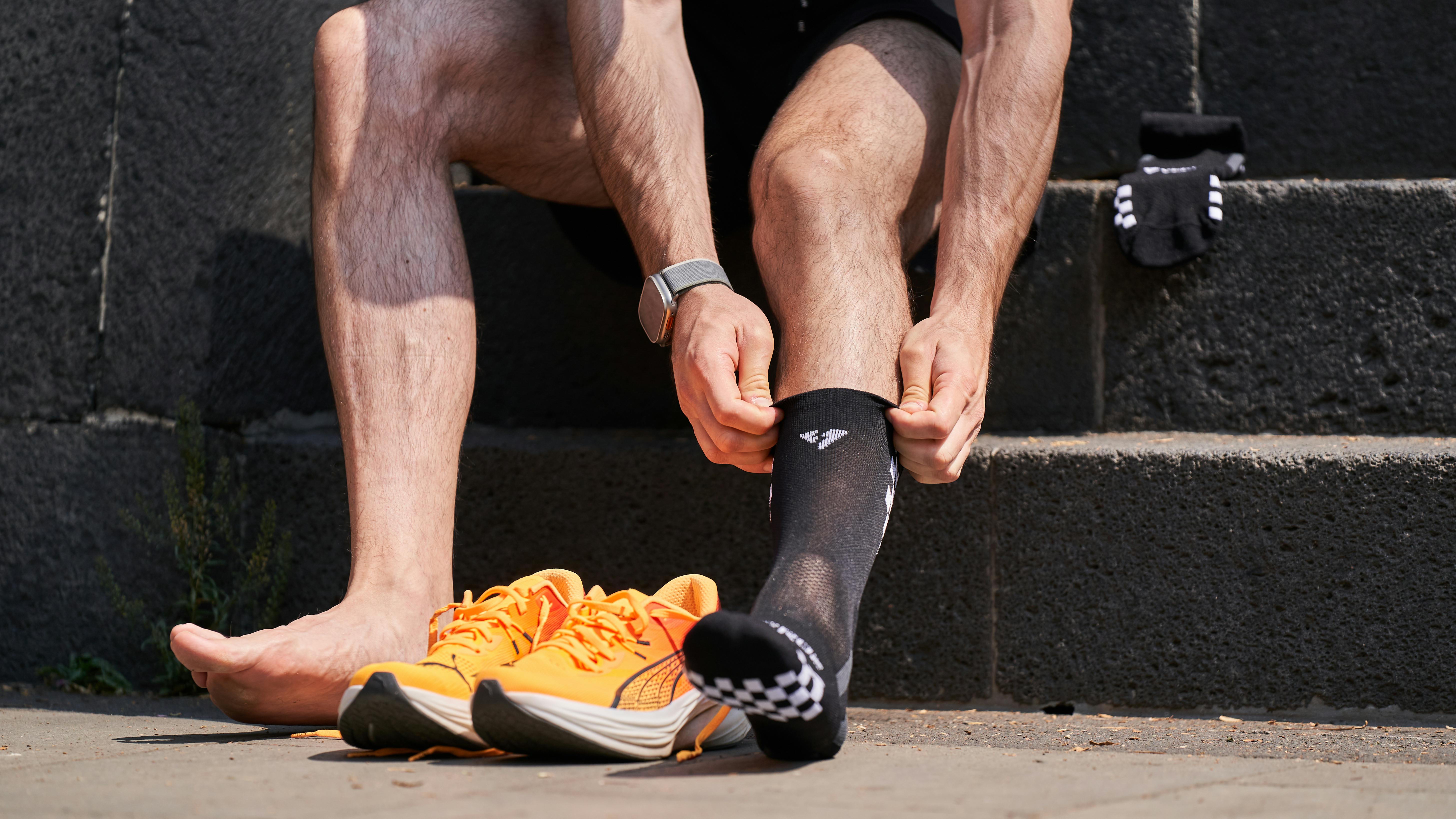
Cotton socks are the #1 unsung cause of marathon training blisters. Cotton holds moisture against your skin, which softens it, which means even minor friction creates blisters. Cheap fix: $14 worth of technical synthetic or merino wool socks.

The two unbeatable picks: Balega Hidden Comfort ($14) and Feetures Elite Light Cushion ($16). Both use moisture-wicking synthetic blends with targeted cushion zones. For cold-weather long runs, Smartwool's merino-blend running socks ($22) regulate temperature and resist odor.

You need 5 pairs minimum for an 18-week training cycle β€” laundry happens, and a second-day-stale sock is genuinely worse than a new one. Most running stores will offer 3-for-$36 deals; take them.

⭐ Editor's Pick β€” Daily Sock
Balega Hidden Comfort No-Show

Drymax-style mohair-and-poly blend, low-cut profile, mesh ventilation. Marathon runners' near-universal pick. Balega's South African manufacturing keeps quality consistent year over year.

$14Shop Balega.com β†’
πŸ‘Ÿ 🧦 ⏱️
350+ miles tested across Brooks Ghost 16, Hoka Clifton 9, ASICS Gel-Cumulus 26, Nike Pegasus 41 β€” paired with Balega and Feetures technical socks. Cushion fatigue tracked at 100, 200, and 300 mile checkpoints.
03
β—‹ Wait Until 10K

GPS watch

Useful at 10K+, essential at half-marathon training, transformational for marathon pacing.

The single biggest beginner mistake: buying a $700 watch before running your first 5K. You don't need pace alerts and VO2 max trending when you're still building base mileage. Wait until you hit 10K-distance training runs β€” usually weeks 7-10 β€” before investing.


For most marathon trainees, the Garmin Forerunner 265 at $450 is the sweet spot. Multi-band GPS for accurate pace, AMOLED display, 13-day battery, and full Garmin Connect ecosystem with structured workouts. Coros Pace 3 at $229 is the budget alternative β€” less polished but accurate where it matters.

For premium: Garmin Fenix 7 at $700 if you also hike or do trail running, or Apple Watch Ultra 2 at $799 if you live in the iPhone ecosystem and want one device for everything. Both are overkill for road marathons; both are great if you want them.

⭐ Editor's Pick β€” Marathon Trainee Watch
Garmin Forerunner 265

Multi-band L1+L5 GPS holds within 2-3 feet in tree cover and urban canyons, AMOLED touchscreen, 13-day battery, and the deepest training metrics in any consumer watch. Garmin Forerunner lineup also includes the cheaper Forerunner 165 at $299.

$450Compare smartwatches β†’
Carbon-plated entry-level "smart" running watches

Avoid sub-$150 "smart" running watches from generic brands β€” GPS accuracy is consistently poor, and you'll regret the investment by your first half marathon. Better to use your phone with Strava free for 6 months, then buy a real Garmin Forerunner at the half-marathon stage.

04
βœ“ Essential

Apparel β€” shorts, tops, and chafing prevention

Three-piece kit that genuinely matters. The wrong shorts will end your training.

The single piece of apparel that ruins more marathon training than any other: poorly-fitting shorts. They ride up, chafe inner thighs, and bunch in places you didn't know could chafe. Solution: invest in liner shorts β€” running shorts with built-in compression briefs.

For men: Lululemon Pace Breaker 7" ($68) is the gold standard. Nike Stride 7" ($65) is the budget alternative. For women: Lululemon Speed Up ($68) or Bandier's running collection. For tops, anything moisture-wicking from Lululemon, Nike, Under Armour, or Patagonia works.

For cold weather (40Β°F and below), add a Patagonia Capilene base layer ($59), Lululemon running tights ($98), and lightweight gloves from Nathan Sports. For sun: Goodr running sunglasses at $25 are unbeatable for the price β€” they don't bounce, polarized, and replaceable if you lose them.

⭐ Editor's Pick β€” Liner Shorts
Lululemon Pace Breaker 7" Liner

Lightweight Lycra-blend with brief liner that genuinely doesn't ride up. Internal pocket fits a phone or 2 gels. Lululemon's 5-year construction means these survive 200+ wash cycles.

$68Shop Lululemon β†’
05
β—‹ Wait Until Half Marathon

Hydration system

Don't carry water for 5K runs. Do carry it for long runs over 90 minutes.

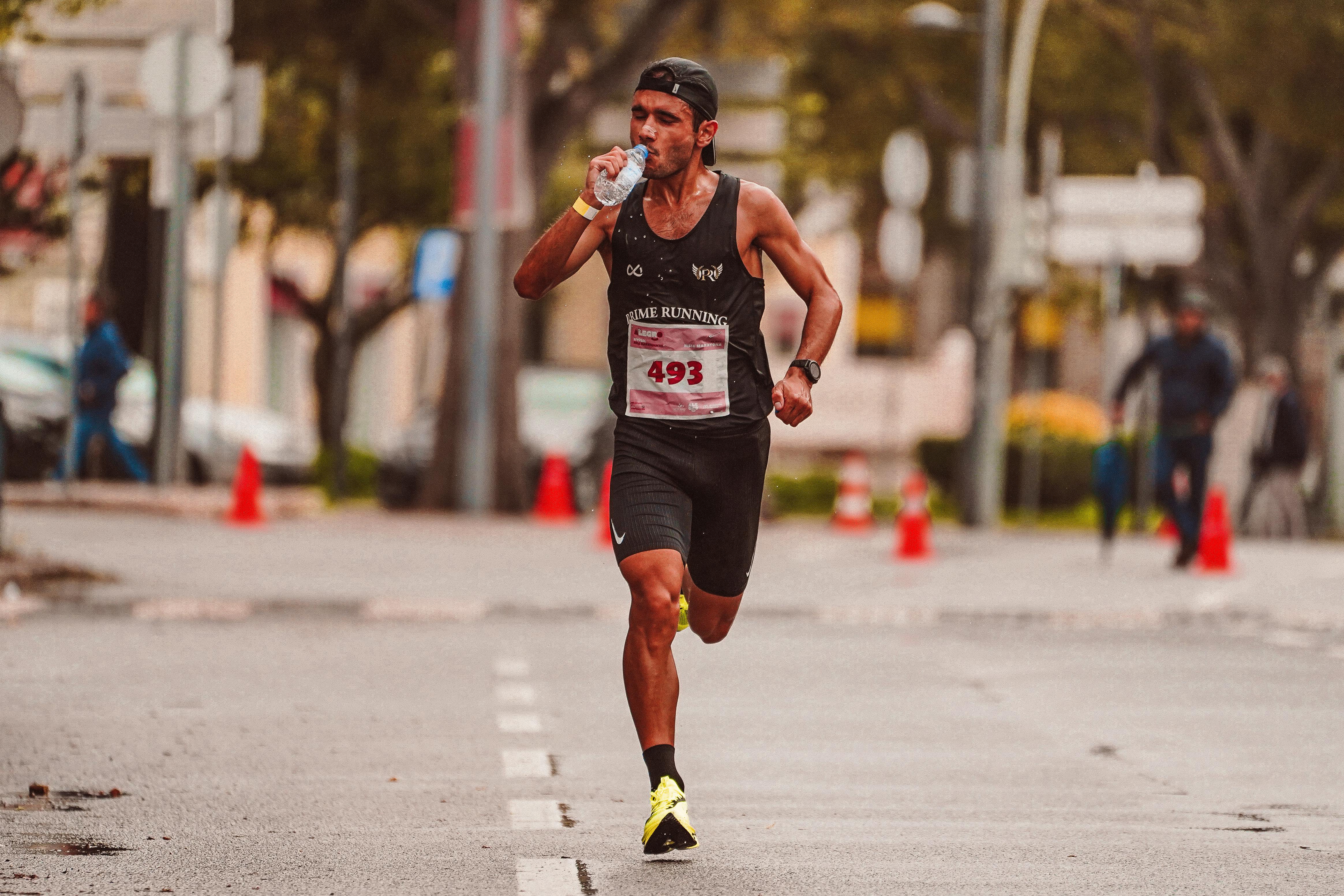
For runs under 60 minutes, you don't need to carry water. Drink before, drink after, that's it. For runs over 90 minutes (most of your half-marathon and marathon training), you absolutely do.

Three hydration approaches. Handheld bottle: Nathan SpeedDraw Plus ($35) is the simplest and the cheapest entry. Holds 18 oz, has a phone pocket, and the strap means you don't grip it actively. Hydration vest: Salomon Active Skin 8 ($150) is the gold standard β€” two soft flasks in front, room for fuel/phone/keys, and breathable enough for 80Β°F runs. Nathan and Osprey make credible alternatives.

Belt-style: I personally hate them, but the FlipBelt Classic ($29) works for shorter runs (8-10 miles) where you just need a phone and gels. Skip the multi-bottle waist belts β€” they bounce too much for marathons.

⭐ Editor's Pick β€” Hydration Vest
Salomon Active Skin 8

The runner's gold-standard hydration vest. Two 500ml soft flasks, multiple cargo pockets, mesh shoulder construction. Carries everything you need for a marathon if your race lacks aid stations. Salomon's vest line is well-regarded across the industry.

$150Shop Salomon β†’
06
βœ“ Critical at 13+ Miles

Fuel β€” gels, chews, and what your gut tolerates

The most personal category. Test brands during training, never on race day.

Above ~75 minutes of running, your body depletes glycogen and you'll bonk without exogenous carbs. The standard recommendation: 30-60g of carbs per hour after the first hour. That's 1-2 gels or 1 packet of chews per hour.

Brands to test: GU Energy Gels ($1.50/gel) is the classic β€” 22g carbs, 100mg sodium, multiple flavors and caffeine variants. Maurten Gel 100 ($4/gel) is the elite-runner pick β€” hydrogel formula sits gentler in the gut, but expensive. SiS Beta Fuel ($3/gel) sits between the two.

For chews: CLIF Bloks ($2.50/pack) and Skratch Labs Sport Chews ($3/pack) are the two reliable picks. Chews are easier on sensitive stomachs but slower to chew while running.

The single most important rule: never try a new gel on race day. Your gut needs 4-6 weeks of training adaptation to handle gels. Test 4-5 brands during your half-marathon training, settle on 1-2 you tolerate, then carry only those for the marathon.

⭐ Editor's Pick β€” Beginner Gel
GU Energy Gel β€” Original

The most widely available gel; sold at virtually every running store and aid station. Affordable enough to test multiple flavors. GU Energy Roctane variant at $2.50 has higher carb density for elite-pace running.

$1.50/gelShop GU Energy β†’
πŸ† πŸ₯€ ⚑
Race-day gear setup tested across 18 weeks β€” Nike Vaporfly 3, Salomon hydration vest, GU and Maurten gels, Goodr sunglasses. The minimum viable kit, not the everything-kit.
07
β—‹ Genuinely Helpful

Recovery tools

Foam rollers actually work. $1,200 recovery boots mostly don't.

The recovery industry sells a lot of magical thinking. The peer-reviewed evidence is clear: foam rolling and self-massage actually work; ice baths help acute soreness; recovery boots are mostly placebo for amateur runners.

Buy in this order. Foam roller: TriggerPoint GRID ($35) handles 95% of recovery needs. Standard 13" length, hollow-core construction, lasts forever. Massage gun: Theragun Elite ($300) is the editor's pick for genuine quality, but the Hypervolt 2 at $200 covers most needs. Skip cheap Amazon clones β€” battery life and impact frequency vary wildly.

What I'd skip: Normatec compression boots ($1,295). They feel great, but the academic literature shows they're not meaningfully better than light walking + leg elevation for recovery. Save the $1,295 for race entries.

⭐ Editor's Pick β€” Foam Roller
TriggerPoint GRID 13"

Industry-standard hollow-core roller. Multi-density surface for varied pressure. Used in PT clinics and pro sports recovery rooms. TriggerPoint's patented design has resisted being copied successfully for 15 years.

$35Shop TriggerPoint β†’
08
β—‹ Race Day Only

Race-day extras

The night-before checklist. Small items that prevent race-day disasters.

The race-day kit beyond your training gear: anti-chafe stick (covered below), lubricant for nipples if you're male (sounds funny; not funny at mile 18), throwaway warm layers for the start corral, a watch you've used for 100+ miles (never a new one on race day), and a fuel plan written on your forearm.

For race-day apparel specifically: nothing new. Wear the shorts you trained in, the shoes you've put 100+ miles on, the socks you know don't blister. The single biggest race-day error is "treating yourself" to new gear that hasn't been tested. Browse our running shoes guide for daily-trainer reviews.

Optional but useful: RaceDots ($10) for fastening your bib to your shirt, Amphipod's race belt for gels ($25), and FlipBelt ($29) for keys + phone. KT Tape at $13 a roll is genuinely useful for known hot spots.

⚠️ Hard-Won Advice

The dreaded chafing question β€” solved

Chafing is the silent marathon killer. You don't notice it during training runs because you're 30-60 minutes in. At mile 14 of a marathon β€” when you've been moving for 2+ hours, sweating, with fabric rubbing skin β€” chafing becomes excruciating. I've seen runners drop out of marathons not because of injury but because they couldn't take another mile of inner-thigh chafing.

The hard-won wisdom: apply anti-chafe products to every potential hot spot before every run over 60 minutes. Inner thighs (always), nipples (if male), under sports bra band (if female), armpits, between toes, anywhere clothing seams contact skin. Do not wait to see if you'll chafe β€” by the time you feel it during a run, you're already past prevention.

Body Glide Original$8 Β· The classic. Clear stick, easy application, works wet or dry. Lasts 2-3 marathons.
Squirrel's Nut Butter$15 Β· Plant-based balm in a tin. Slightly messier but stronger hold for ultra-distance runners.
2Toms SportShield$10 Β· Roll-on liquid that dries clear. Best for under-bra and hard-to-reach areas.
Aquaphor Healing Ointment$8 Β· Works in a pinch but melts in heat. Better for post-run recovery on chafed skin.

Budget breakdown β€” starter, intermediate, committed

Three honest budgets. The starter kit at $230 will get you to your first marathon. The committed kit at $1,800+ adds genuine quality but isn't required. Build your own comparison on our comparison tool or browse all fitness reviews.

GearStarterIntermediateCommitted
Running shoesDaily trainer $140 Brooks Ghost 16 $285 Ghost 16 + Hoka Clifton 9 $545 Daily + race + trail
Technical socks5 pairs $70 Balega Γ—5 $70 Balega Γ—5 $110 Balega + Smartwool
Apparel2 shorts + 3 tops $120 Nike basics $240 Lululemon Pace Breakers $420 Full kit + cold-weather
GPS watchOptional at 5K $0 Phone + Strava $229 Coros Pace 3 $450 Garmin Forerunner 265
HydrationFor 90+ min runs $0 Tap water before/after $35 Nathan handheld $150 Salomon Active Skin 8
FuelFor full training cycle $60 40Γ— GU gels $80 GU + Skratch chews $140 GU + Maurten
RecoveryFoam roller minimum $0 Tennis ball, body weight $35 TriggerPoint GRID $235 GRID + Hypervolt 2 mini
Anti-chafeMandatory after 60 min $8 Body Glide $23 Body Glide + 2Toms $33 Body Glide + SNB + 2Toms
TOTAL Real cost $398 $997 $2,083

Frequently asked questions

The most common reader questions on marathon training gear.

Do I really need expensive carbon-plated race shoes?

For first-time marathoners β€” no. Carbon-plated shoes like the Nike Vaporfly 3 ($260) genuinely give a 2-4% efficiency boost in peer-reviewed studies, but for someone running their first marathon at 4:30+, that's saving 8-12 minutes β€” useful but not transformative. They also wear out fast (200-mile race-only life).

For sub-3:30 marathoners chasing PRs, yes, get them. For everyone else, race in a pair of Brooks Ghost 16 or Hoka Clifton 9 with 100+ training miles on them.

Can I train for a marathon using just my Apple Watch?

Yes for half-marathon distances, with caveats for full marathon. Apple Watch Series 10 has good GPS and HR tracking. The issue is battery β€” 18-hour rated, drops to ~6 hours with GPS active. Marathon training requires 3-4 hour long runs at peak, which strains the watch.

For Apple ecosystem users, Apple Watch Ultra 2 at $799 fixes the battery. Otherwise, switch to Garmin Forerunner 265 at $450 for marathon training. Browse our fitness tracker guide.

When should I start fueling during long runs?

Standard advice: start fueling at 45 minutes into any run lasting 75+ minutes. Take 30-60g of carbs per hour after the first hour β€” that's 1-2 GU gels or 1 packet of Skratch Chews. Practice gel-taking during training runs from week 8 onward.

Critically, never use untested gels on race day. Your gut needs 4-6 weeks to adapt. Browse current fuel options on our Fitness category.

How do I prevent blisters?

Three rules. One: technical synthetic or merino wool socks (Balega or Feetures) β€” never cotton. Two: properly fitted shoes with a thumbnail of toe room past your longest toe. Three: anti-chafe stick on hot spots between toes for runs over 90 minutes.

For chronic blister sufferers, a thin Injinji toe-sock liner under your normal sock works wonders. Browse our running shoes guide.

Are compression sleeves and socks worth it?

Marginally helpful for recovery, mostly placebo for performance. The peer-reviewed evidence shows minor recovery benefit (faster lactate clearance, slightly reduced muscle soreness) but no measurable performance improvement. CEP and 2XU are the credible brands.

If your calves cramp during long runs or feel beat up afterward, $50-70 calf sleeves are worth trying. If you don't have those issues, skip them.

Should I run with music or podcasts?

Personal choice β€” no universal answer. Most beginners benefit from music for motivation; experienced marathoners often run without. Shokz OpenRun bone-conduction headphones at $130 are the runner's gold standard β€” your ears stay open to traffic and ambient sounds. Skip AirPods Pro outdoors β€” closed-ear designs are safety-compromising while running near roads.

Note: many marathon races prohibit headphones. Check race rules in advance. Browse our wireless earbuds guide.

Where should I buy?

Local running specialty stores for shoe fitting (gait analysis is genuinely valuable for first-time runners). Otherwise: Zappos for shoes (free returns), Running Warehouse for runner-specific gear, REI for recovery and apparel, Amazon for everything else. Brand-direct sites for warranty: Brooks, Hoka, Garmin.

Browse current running gear deals on our deals page.

Get our weekly buying guides

Honest reviews like this one, plus the best deals on the products we test. No spam, ever.