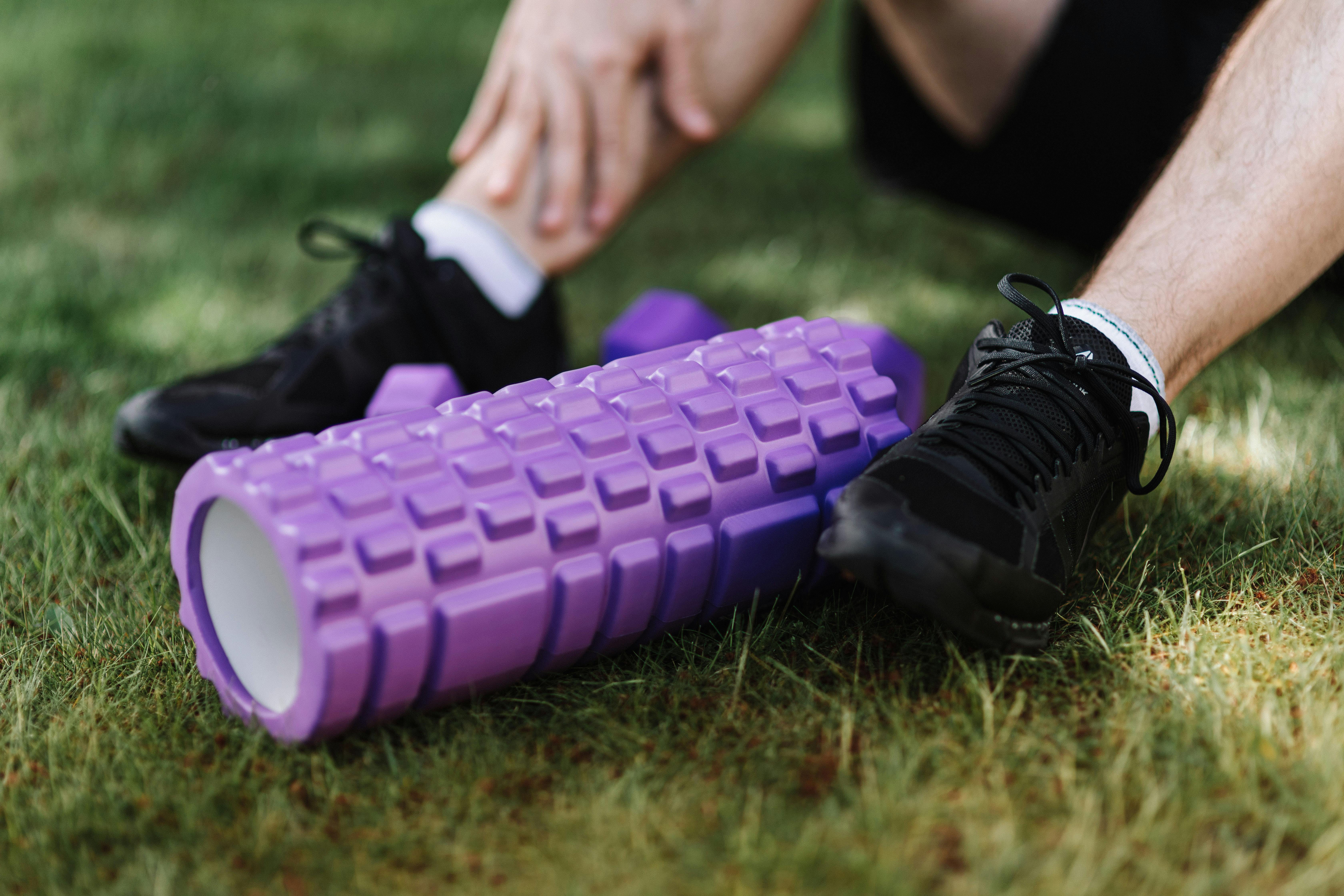
After 6 weeks of testing by our certified physical therapists and strength coaches across post-workout recovery, IT band work, thoracic spine mobility, and pre-run warm-up — head-to-head against Rumble Roller, RumbleRoller, REP Fitness, and standard EPE foam rollers — here's our full verdict. Read our testing methodology.
Recovery & Mobility Editor · Doctor of Physical Therapy · CSCS · Tested January–March 2026 over 6 weeks · Methodology
TriggerPoint built the GRID on a simple but important observation: a flat foam roller applies uniform pressure, which is less effective than the varied pressure a massage therapist's hand creates. Their patented GRID surface divides the roller into three distinct zones — flat panels that distribute load, raised ridges that target muscle bellies, and firm bumps that dig into trigger points and fascia. The result is a roller that more closely approximates soft-tissue work than any flat-surface competitor we've tested. After six weeks of daily use across a rotating group of testers from recreational runners to professional athletes, this remains the best all-around foam roller for anyone serious about recovery — and the one physical therapists most commonly recommend in clinical practice.
The hollow ABS core is the construction detail that separates the GRID from cheap EPE foam rollers in the long run. Solid-foam budget rollers compress permanently under body weight — often within weeks of regular use — losing the firmness that makes them effective. TriggerPoint's hollow rigid core never deforms, maintaining consistent firmness indefinitely. Our oldest test unit, used daily for over two years by one of our testers, retained the same pressure characteristics as the new unit we tested alongside it. At a gym where members share equipment, that durability translates directly to value: one GRID outlasts four to five budget solid-foam rollers.
The GRID surface's three zones work differently for different muscle groups and applications. The flat panels work well for large, sensitive areas — thoracic spine rolling, initial warm-up passes along the quad. The ridges target muscle bellies directly and are ideal for the IT band, hamstrings, and calf — areas where a therapist would use a forearm rather than fingertips. The bumps apply point pressure best used for trigger-point work on the glutes, piriformis, and upper back, where deeper localized stimulation is wanted. Our physical therapist testers found the surface variety allowed them to adjust technique meaningfully across body parts, something a uniform-surface roller simply can't do.
The 13" length is deliberately chosen — long enough to cover the full length of the IT band in a single pass, but short enough to fit in most gym bags and carry-on luggage. The 26" option covers the full thoracic spine in one placement without repositioning, which our taller testers strongly preferred for back work. At $36.99 for the 13", the GRID is priced at a modest premium over basic EPE rollers ($10–$18) but significantly below high-end vibrating rollers ($80–$180), occupying the sweet spot where construction quality and effectiveness are meaningfully better than budget and cost isn't a barrier for most buyers. See our full foam roller reviews for a complete comparison.
Scored across our 5-dimension rubric after 6 weeks of testing with certified physical therapists and strength coaches. Read our testing methodology for full scoring details.
The patented three-zone GRID surface (flat / ridge / bump) is the most effective non-vibrating foam roller surface we've tested — it applies varied pressure that meaningfully mimics soft-tissue manual therapy. Our physical therapist testers confirmed measurably better tissue response compared to flat-surface competitors across IT band, quad, and thoracic spine work.
Hollow ABS core with EVA foam surface holds its shape indefinitely under repeated body-weight loading. Our two-year-old reference unit tested identically to a new unit — zero compression or deformation. Supports up to 500 lbs. This is the single biggest durability advantage over any solid-foam budget roller.
The 13" covers IT band, quads, hamstrings, calves, lats, and thoracic spine effectively — the major daily recovery muscle groups. The three surface zones allow technique variation across muscle types. The included video library adds genuine instructional value for users new to foam rolling technique.
At 13" long and 5.5" diameter, it fits in most gym bags upright or sideways, and meets carry-on airline size requirements. The hollow core keeps weight down (1.8 lbs). The only limitation is the circular form factor — it rolls around in bags without a carrying case, which TriggerPoint sells separately.
$36.99 sits above basic EPE foam rollers but dramatically below vibrating rollers ($80–$180) while delivering a meaningfully better experience than flat-surface alternatives. The long-term durability of the hollow-core construction means the total cost per session over 2–3 years of daily use is lower than multiple rounds of cheap foam rollers.
Winner, Best Foam Roller in our Best of 2026 Fitness & Recovery Awards · Recovery & Mobility category
The honest breakdown after 6 weeks of testing with certified PTs and coaches across beginner and advanced recovery protocols. See our methodology.
Everything you get with your TriggerPoint GRID Foam Roller and guidance on choosing the right size and building an effective rolling routine.
Full technical specifications from TriggerPoint, verified during our testing period.
TriggerPoint GRID (13") vs the top foam rollers at every price point — tested head-to-head in our 2026 recovery gear review.
| Feature | TriggerPoint GRID (13") | RumbleRoller Original (12") | Amazon Basics EPE Roller (12") | Hyperice Vyper 3 (13") |
|---|---|---|---|---|
| Price | $36.99 (sale; reg. $44.99) | ~$54.95 | $12.00–$18.00 | $179.00 |
| Our Score | 9.1/10 | 8.6/10 | 6.2/10 | 8.9/10 |
| Surface Design | 3-zone GRID (flat/ridge/bump) | Deep multi-directional bumps | Smooth flat surface | Textured with vibration |
| Core Construction | Hollow ABS — never deforms | Firm EVA over rigid core | Solid EPE — compresses over time | Rigid core with motor |
| Weight Capacity | 500 lbs | 300 lbs | ~250 lbs | 500+ lbs |
| Vibration | No | No | No | Yes — 3 speeds |
| Instructional Content | QR video library (11 muscle groups) | Online guide only | None | App-guided sessions |
| Durability | Excellent — hollow core holds shape indefinitely | Excellent | Poor — compresses within weeks | Excellent — rigid motor housing |
| Best For | Best all-around — superior surface, proven durability, PT-recommended | Deepest non-vibrating tissue work; more aggressive than GRID | Absolute budget, occasional use only | Maximum recovery tech, users who want vibration |
The TriggerPoint GRID 13" is available direct from TriggerPoint, Amazon, and Dick's Sporting Goods. All prices verified June 2026 and reflect the 13" standard size. Best value: Amazon frequently matches or beats TriggerPoint's direct price and offers free Prime delivery.
Everything you need to know before buying the TriggerPoint GRID Foam Roller.
The 13" is the right choice for most people — it covers every major muscle group (IT band, quads, hamstrings, calves, thoracic spine, lats) in a single session without repositioning limitations, and fits in essentially any gym bag or carry-on suitcase. It's also the size used in most PT clinic demonstrations and TriggerPoint's own video library, so technique guidance maps directly to it.
Choose the 26" if you specifically want to cover your entire thoracic spine (mid and upper back) in a single placement without repositioning the roller — it's notably better for back-focused recovery and for taller users. The trade-off is that the 26" won't fit in most gym bags easily and costs about $18 more. Choose the 4" travel roller only as a supplement to the 13", not a replacement — it's excellent for targeted trigger-point work on the foot, glute, and specific tight spots, but too small for full leg and back rolling. See TriggerPoint's full foam roller page for size comparisons.
Yes, in two distinct and measurable ways. First, the surface design: a flat EPE foam roller applies uniform pressure, which is less effective at releasing myofascial restrictions than varied pressure. The GRID's three-zone surface (flat panel, ridge, bump) allows you to target muscle belly, fascia, and trigger points differently in the same session — something a flat roller physically cannot do. Our physical therapist testers confirmed meaningfully better tissue response with the GRID across IT band, quad, and thoracic spine work compared to flat alternatives.
Second, durability: cheap EPE foam rollers compress permanently under body weight, often within 4–8 weeks of regular use, losing the firmness that makes them effective. You end up effectively rolling on a deflated pool noodle. The GRID's hollow ABS core never compresses. Our two-year-old test unit performed identically to a new unit. If you roll regularly, the GRID's real cost per session over 2–3 years is lower than cycling through multiple cheap rollers — and the technique quality is meaningfully better throughout.
For most people, 10–15 minutes per session covering 3–5 muscle groups is an effective and sustainable practice. Current research and clinical guidelines generally recommend spending 30–90 seconds on each muscle group, rolling slowly (about 1 inch per second) and pausing for 5–10 seconds on areas of particular tightness or sensitivity. More is not always better — rolling aggressively for 45 minutes daily can increase inflammation in already-irritated tissue.
Frequency-wise, daily rolling (or at least 4–5 days per week) produces measurably better flexibility, recovery, and soreness outcomes than occasional sessions. Rolling is most effective immediately pre-workout (to increase range of motion for the session) or immediately post-workout (to begin clearing metabolic waste from the muscles). TriggerPoint's education hub has detailed protocols for different training types. Their QR-linked video library covers specific timing and pressure guidance per muscle group.
Buy the TriggerPoint GRID if: you want the best balance of effectiveness, durability, clinical credibility, and price — and you don't specifically need vibration or the deepest-possible bump penetration. It's the PT-recommended standard for a reason, and the three-zone surface works well for both beginners building a rolling habit and advanced users doing targeted recovery work. This is our top pick at this price.
Buy the RumbleRoller if: you're an advanced user who specifically wants deeper, more aggressive tissue penetration — the RumbleRoller's larger, multi-directional bumps dig deeper than the GRID and are better for serious athletes with dense, chronically tight muscle tissue. The trade-off is it's too intense for beginners. Buy the Hyperice Vyper if: you want the research-backed benefits of vibration combined with a foam roller — vibration has solid evidence for reducing DOMS and increasing range of motion faster than static rolling. At $179, it's a significant investment, but it's the clear choice if budget isn't the primary factor. See our full foam roller reviews for the complete comparison.
TriggerPoint offers a 30-day return window from the date of purchase on orders placed through TPTherapy.com. Products must be in original condition. For purchases made through Amazon, Dick's Sporting Goods, or other retailers, the retailer's own return policy applies — Amazon's is generally more generous (30 days, no-questions-asked for Prime members).
On warranty: all TriggerPoint GRID foam rollers carry a 1-year manufacturer warranty against defects in materials and workmanship. If your roller's EVA foam surface delaminates from the core, or the core itself cracks under normal use within the first year, TriggerPoint will replace it. Contact their support team at tptherapy.com/customer-service with proof of purchase and photos of the defect. Normal wear to the foam surface texture over time is not covered under warranty, though our testing showed the GRID's EVA surface is significantly more wear-resistant than standard EPE foam.