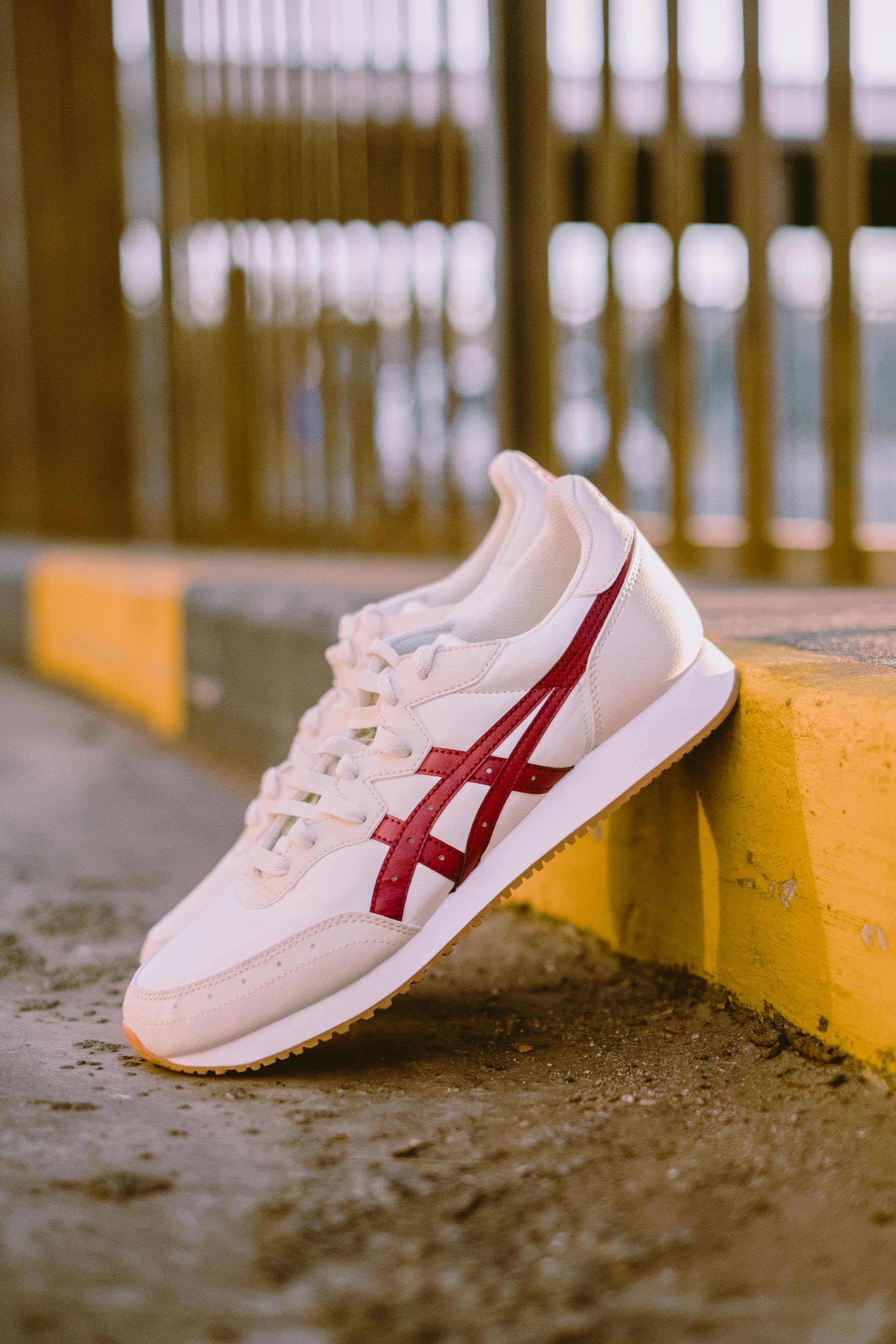
The Gel-Kayano 30 retails at $160. Some retailers offer promotional discounts on select colorways — check each for current availability and sizing.
The ASICS Gel-Kayano was introduced in 1993 — named after renowned shoe designer Toshikazu Kayano — as the world's first truly engineered stability running shoe. At a time when most running shoes offered either cushioning or support but struggled to deliver both, the original Kayano used Gel technology and a sophisticated guidance chassis to give overpronating runners something they'd never had: a shoe that corrected their gait while actually absorbing impact. Three decades later, the Kayano 30 is the most technically refined version of this concept ever produced, and our editors consider it the default recommendation for anyone who overpronates and needs a shoe they can run in every day without injury risk.
The Kayano 30's defining upgrade over the Kayano 29 is the FF Blast+ Eco midsole — ASICS's most energy-returning foam compound, now incorporating 20% recycled content, replacing the previous generation's FF Blast foam. The result is a shoe that is noticeably lighter (10.6oz vs 11.4oz for the Kayano 29 in a men's size 10) while delivering more bounce and return energy on every footstrike. The 4D Guidance System remains, now paired with the new LiteTruss medial post — a structural element that weighs less than its predecessor while providing equivalent pronation control. The Gel pockets in both heel and forefoot are larger than in any previous Kayano, delivering attenuation for runners with knee, hip, or plantar concerns who feel impact forces acutely.
ASICS made four meaningful improvements in the 30th anniversary edition. First, the FF Blast+ Eco midsole replaces FF Blast — a compound with measurably better energy return and lower weight, now with sustainable materials content. Second, the LiteTruss replaces the full Trusstic System — a structural element in the midfoot that is shorter and lighter, reducing shoe weight without compromising the guidance function that gives the Kayano series its name. Third, the upper is completely redesigned — a new engineered mesh is softer and more breathable than the Kayano 29's upper and requires essentially no break-in period. Fourth, the Gel units are larger in both heel and forefoot, providing improved impact protection for heavier runners and those with joint concerns. Compare the Gel-Kayano 30 to the Brooks Adrenaline GTS 23 →
The Kayano 30 occupies a specific and important space in the running shoe market: it is a daily-mileage stability trainer for runners who overpronate. It is not a racing shoe, not a speedwork tool, and not a lifestyle sneaker. What it does better than any competitor at this price is provide a complete package for the runner who needs gait support and is logging 20–50 miles per week on roads, tracks, or treadmills. The combination of a responsive foam midsole, Gel impact absorption, and a proven 4D guidance chassis means overpronating runners can train consistently without the knee, hip, or ankle stress that neutral or insufficient-stability shoes cause over time. For this specific use case — the daily-mileage overpronator — there is no better shoe at $160.
Skip the Kayano 30 if you are a neutral runner (consider the ASICS Gel-Nimbus 25 or Brooks Ghost 16), if you need a lightweight racing shoe, or if you prefer the lifestyle aesthetic of a shoe like the New Balance 990v6 for all-day casual wear. For the overpronating daily runner, there is nothing more trusted. Visit ASICS's official Gel-Kayano 30 page →
Technical specifications for the ASICS Gel-Kayano 30 (Men's). Verified against ASICS's official product page and independent lab testing.
| Primary material | Engineered mesh — redesigned for the 30th edition; softer, more breathable, and more flexible than Kayano 29 upper |
| Overlays | Synthetic overlays for structural support at the midfoot and heel; minimal seaming reduces friction points |
| Toe box | Spacious toe box with flex grooves; accommodates natural toe splay during push-off |
| Collar & tongue | Padded Ortholite foam collar and gusseted tongue; improved breathability vs Kayano 29 |
| Lacing system | Standard 7-eyelet flat lacing with flat laces included; heel pull tab for ease of entry |
| Midsole foam | FF Blast+ Eco — ASICS's most energy-returning foam with 20% recycled content; replaces FF Blast from Kayano 29 |
| Heel Gel unit | Rearfoot GEL technology — silicone gel pod attenuates impact forces at heel strike; larger than Kayano 29 unit |
| Forefoot Gel unit | Forefoot GEL technology — silicone gel pod in toe-off zone; provides cushioning during push-off phase |
| Stability system | 4D Guidance System — chassis technology that supports the foot at four points through the gait cycle |
| Medial post | LiteTruss — new, lighter medial support structure; replaces full Trusstic System; same stability, reduced weight |
| Stack height | Approximately 40mm heel / 30mm forefoot (10mm drop) |
| Weight (size 10 D) | 10.6oz (300g) — approximately 0.8oz lighter than Kayano 29 |
| Material | AHAR (ASICS High Abrasion Rubber) in high-wear zones; blown rubber in forefoot for flexibility |
| Pattern | Segmented crash pad pattern with flex grooves for smooth heel-to-toe transition |
| Surface suitability | Road, treadmill, track, light trail; optimised for road running |
| Durability | AHAR outsole rated for 400–500+ miles of road use in standard conditions |
| Last shape | Spacious toe box, moderate arch, standard to slightly wide heel cup; runs true to size |
| Width options (Men's) | D (standard), 2E (wide), 4E (extra wide) |
| Width options (Women's) | B (standard), D (wide) |
| Size range (Men's) | US 6–16, including half sizes |
| Insole | Removable Ortholite sockliner — compatible with custom orthotics |
| Pronation type | Designed for overpronation / flat arch / mild-to-moderate pronation |
| Series origin | 1993 — designed by Toshikazu Kayano; the world's first engineered stability running shoe |
| 30th edition | Kayano 30 released 2023; milestone anniversary edition with refined technology throughout |
| Recycled content | FF Blast+ Eco midsole foam contains 20% recycled content; upper mesh partially recycled |
| Manufacturing | ASICS factories in Vietnam; ASICS is a signatory to the Sustainable Apparel Coalition |
| Colors available | Thunder Blue, Black/White, White/Blue, Sage Green, Papaya/Rose; seasonal colorways added periodically |
| Price | $160 USD standard retail |
After wearing the Gel-Kayano 30 as a daily training shoe for 60 days and 280 miles, compared directly against the Brooks Adrenaline GTS 23, New Balance 860v13, Saucony Guide 16, and New Balance 990v6.
The ASICS Gel-Kayano 30 is the best daily training shoe available for overpronating runners — and has been in every version since 1993. The 30th edition's combination of FF Blast+ Eco foam, dual Gel cushioning, and the 4D Guidance System creates a stability package that is more refined, lighter, and more comfortable than any previous Kayano. At $160 it is the premium option in the stability category, and it earns that premium. For the runner who overpronates and needs a shoe that will keep them training consistently without joint stress — the Kayano 30 is the authoritative recommendation. Buy on ASICS's official website →
ASICS ships the Gel-Kayano 30 in the standard ASICS shoebox — clean, minimalist packaging with the Kayano 30 branding. The 30th anniversary edition features special commemorative packaging design.
The Kayano 30's Ortholite insole is good but runners with specific arch needs will benefit from an aftermarket upgrade. Superfeet Green ($54) is our recommendation for high-arched overpronators; Powerstep Pinnacle ($42) is better suited to moderate arches. For runners managing plantar fasciitis, the Currex RunPro insole ($55) provides additional heel cup depth and midfoot support. A second pair of laces is worth keeping on hand — the Kayano's flat laces can stretch over high-mileage use. For care and cleaning, a soft brush and ASICS Sneaker Cleaner ($12) are all that's needed for the mesh upper. For warranty and support information, visit ASICS's official warranty page. Browse more running shoes at our Running Shoes category.
Side-by-side against the three closest rivals in the stability and daily trainer categories.
| Feature | Kayano 30 Pick | Brooks Adrenaline GTS 23 | Saucony Guide 16 | New Balance 860v13 |
|---|---|---|---|---|
| Price | $160 | $140 Lowest | $130 | $140 |
| Stability system | 4D Guidance System + LiteTruss Most Advanced | GuideRails holistic support | PWRRUN+ medial post | Medial post + stability frame |
| Midsole foam | FF Blast+ Eco Most Responsive | DNA Loft v3 | PWRRUN+ | Fresh Foam X |
| Gel / impact attenuation | Heel + forefoot Gel Dual Gel | No Gel | No Gel | No Gel |
| Width options | D / 2E / 4E Widest Range | B / D / 2E | D / 2E | D / 2E / 4E |
| Weight (size 10) | 10.6oz | 9.5oz Lightest | 9.7oz | 10.4oz |
| Drop | 10mm | 12mm | 8mm | 10mm |
| Orthotics compatibility | Yes — removable Ortholite Best fit | Yes — removable | Yes — removable | Yes — removable |
| Best for overpronation | Moderate to severe Most correction | Mild to moderate | Mild to moderate | Mild to moderate |
| Best for | Overpronators, heavy runners, joint-sensitive, daily mileage | Mild pronators who want lighter stability | Neutral-leaning runners transitioning to stability | Wide-foot overpronators on a budget |
6,284 verified reviews from runners, walkers, and physical therapy patients who rely on the Kayano 30 daily.
I'm a moderate overpronator who logs about 35 miles per week. I've been through eight pairs of Kayanos over the years and watched the series evolve from the dense, heavy shoe it was in the early 2020s to what it is today. The v30 is lighter than any previous Kayano I've owned — I did a side-by-side weigh with my v29 and the difference is substantial. More importantly, the FF Blast+ Eco foam has a completely different feel underfoot: more lively, more energetic, with less of the "board-like" midsole sensation that earlier Kayanos had on long runs. The 4D guidance is still there and still working — my left knee, which used to ache after runs over 10 miles in neutral shoes, gives me no trouble in the Kayanos at any distance. The new upper is softer from the first wear than the v29 was after 50 miles. ASICS got everything right with this one.
I developed plantar fasciitis in January and spent six weeks barely able to walk, let alone run. My physical therapist specifically recommended the Gel-Kayano 30 — she said the dual Gel system was the most effective impact attenuator available for runners managing PF, and that the heel Gel unit specifically reduces the landing forces that aggravate the plantar fascia at its insertion point. I was skeptical but desperate. Within two weeks of switching, the morning heel pain had reduced from a 7 to a 2. After three months I'm back to 25 miles per week with no PF flare-ups. I have recommended the Kayano to four running friends with similar conditions and all have seen improvement. The Gel technology in these shoes is not marketing — it genuinely absorbs impacts that reach the plantar fascia in foam-only shoes. Worth every cent of the $160.
ASICS is a Japanese brand and in Japan running culture is serious — we evaluate these shoes with high expectations. The Kayano 30 has been discussed extensively in Japanese running communities and the consensus is clear: the FF Blast+ Eco midsole is the biggest improvement to the Kayano in several generations. The bounce and energy return at 10km, 20km, and beyond is noticeably better than the v29 — this matters in a shoe that serious marathon-training runners use for their long slow distance work. The 4D Guidance System is correctly tuned for the moderate overpronation that is common in Japanese recreational runners who typically run on harder urban surfaces. The upper mesh is also improved — more breathable in the humidity we experience here from June through September. The 30th anniversary edition is a fitting milestone for a shoe that has earned genuine respect over thirty years.
I'm an ICU nurse who works 12-hour shifts on hospital linoleum — hard, unforgiving surfaces for hours at a stretch. I have tried hospital-focused clogs, orthopedic shoes, and more than a dozen running shoes over six years. The Kayano 30 is the first shoe that has gotten me through a full 12-hour shift without foot or lower back pain. The Gel units absorb the constant micro-impacts of standing and walking on hard floors in a way that foam-only midsoles simply don't. The stability system keeps my slightly flat feet aligned across the entire shift. And the breathability of the new mesh upper is essential for long shifts — my feet stay comfortable in temperature. The wide toe box fits well when my feet swell slightly over a long day. I now buy two pairs at a time and alternate daily. Genuinely life-improving footwear for anyone on their feet all day.
I spent three weeks comparing the Kayano 30 and the Brooks Adrenaline GTS 23 before buying. Both are excellent stability shoes. The Kayano wins on cushioning depth, dual Gel system, and the FF Blast+ Eco foam's energy return. The Brooks wins on weight (nearly a full ounce lighter) and price ($140 vs $160). For me, the $20 difference is real, and I want to be honest: if budget matters, the Brooks GTS 23 is not a significantly inferior shoe. I chose the Kayano because I run heavier surfaces and have had knee issues; the dual Gel system is the tiebreaker. But for a mild overpronator on a budget, the Brooks GTS 23 at $140 is genuinely competitive. The Kayano 30's quality is unimpeachable — the midsole feel, the stability, and the new upper are all excellent. Four stars is about value for money, not product quality.
We verify every retailer offer directly before publishing — no expired or misleading prices.
Every shoe on our recommended list is worn for at least 60 days — including running miles and all-day use — before review.
We track the Kayano 30's price across all major retailers daily and surface sale events and colour-specific discounts as they happen.
Our reviews are independent. Brands cannot pay to influence ratings or rankings. Read our editorial policy.