
Sony vs. Bose: Which Audio & Electronics Giant Wins?

This isn't a headphone review. We compared Sony and Bose as companies — history, leadership, revenue, sponsorships, sustainability, retail footprint and culture — across 12 rounds. Here's how a sprawling electronics conglomerate and a privately-held audio specialist actually stack up in 2026.

PR
Priya Raman
Senior Brand & Business Editor · 11 years covering consumer brands
274 comments 5.4k shares

Sony and Bose rarely get compared head-to-head, and that's exactly what makes 2026 an interesting moment to do it. Sony is a sprawling, publicly traded entertainment and electronics conglomerate spanning gaming, music, film, image sensors and financial services, with audio as just one piece of a much bigger machine. Bose, by contrast, is a privately held company that has stayed almost entirely focused on one thing — audio — for more than six decades, answering to no public shareholders at all.

This comparison deliberately leaves individual product reviews out of it — no headphone shootouts, no spec-sheet battles. What follows is 12 rounds comparing Sony and Bose purely as companies: their histories, leadership, financials, sponsorships, marketing, sustainability commitments, retail footprints, and cultural standing. If you want to browse either brand directly, you can visit sony.com or bose.com.

Sony Group Corp.

  • Founded 1946, as Tokyo Tsushin Kogyo
  • Founders Masaru Ibuka & Akio Morita
  • Headquarters Minato, Tokyo, Japan
  • CEO Hiroki Totoki (since Apr 2025)
  • FY2026 revenue ¥12.48 trillion (~$83B)
  • Stock ticker NYSE: SONY · TSE: 6758
  • Famous tagline "make.believe" (2009–2019)
  • Sub-brands PlayStation, Sony Music, Sony Pictures

Bose Corporation

  • Founded 1964, by Dr. Amar Bose
  • Founder MIT professor of electrical engineering
  • Headquarters Framingham, Massachusetts, USA
  • CEO Lila Snyder
  • Estimated revenue ~$3 billion (private, undisclosed)
  • Ownership Privately held · MIT holds non-voting shares
  • Famous tagline "Better Sound Through Research"
  • 2024 acquisitions McIntosh Laboratory, Sonus faber
Round 01

Company Origins & History

Sony is the older company by 18 years. Masaru Ibuka and Akio Morita founded it on May 7, 1946, in a bombed-out Tokyo department store, initially as Tokyo Tsushin Kogyo (Tokyo Telecommunications Engineering Corporation) — a name Morita realized was unpronounceable to Western customers after a 1953 U.S. trip, leading to the "Sony" rebrand in 1958, derived from the Latin "sonus" (sound).

Bose started life in 1964 when Dr. Amar Bose, an MIT electrical engineering professor, grew frustrated with the sound quality of a stereo system he'd just purchased and set out to build something better himself, launching the company from Framingham, Massachusetts. Winner: Tie. Sony's postwar founding story and eight-decade run into gaming and entertainment is the broader corporate saga; Bose's origin as one professor's personal obsession with acoustics is arguably the more singular, product-driven myth.

Round 02

Logo, Identity & Slogan

Sony's wordmark has barely changed since the late 1950s — a clean, bold sans-serif that's stayed instantly recognizable across Walkmans, Trinitron TVs and PlayStation consoles alike. Its most famous tagline, "make.believe," ran from 2009 to 2019, tying together its entertainment and technology businesses under one idea; today the company leads instead with its broader purpose statement, "fill the world with emotion, through the power of creativity and technology."

Bose's wordmark is similarly understated, but its identity has always been carried more by a philosophy than a slogan: "Better Sound Through Research," a phrase that dates back to the company's earliest advertising and still describes its self-image as an engineering-first, research-driven organization rather than a mass consumer brand. Winner: Sony, narrowly — decades of consumer electronics, gaming and entertainment products have made the Sony logo one of the most recognized in the world, edging out Bose's quieter, research-first identity.

Round 03

Global Revenue & Business Portfolio

This round isn't close, mostly because these two companies aren't really playing the same game. Sony reported ¥12.48 trillion in revenue for the fiscal year ended March 31, 2026 — roughly $83 billion — spread across gaming and network services (PlayStation), music, pictures, electronics, image sensors, and financial services. Audio and headphones are a genuine business line, but a small slice of a much larger entertainment and technology conglomerate.

Bose doesn't disclose current financials since going fully private, but third-party estimates and its last reported figures put annual revenue in the $3 billion range, built almost entirely around audio: headphones, speakers, aviation headsets, automotive sound systems, and — since 2022 — self-fitting hearing aids. Winner: Sony, on sheer scale and diversification, though Bose's laser focus on one category is itself a deliberate strategic choice rather than a limitation.

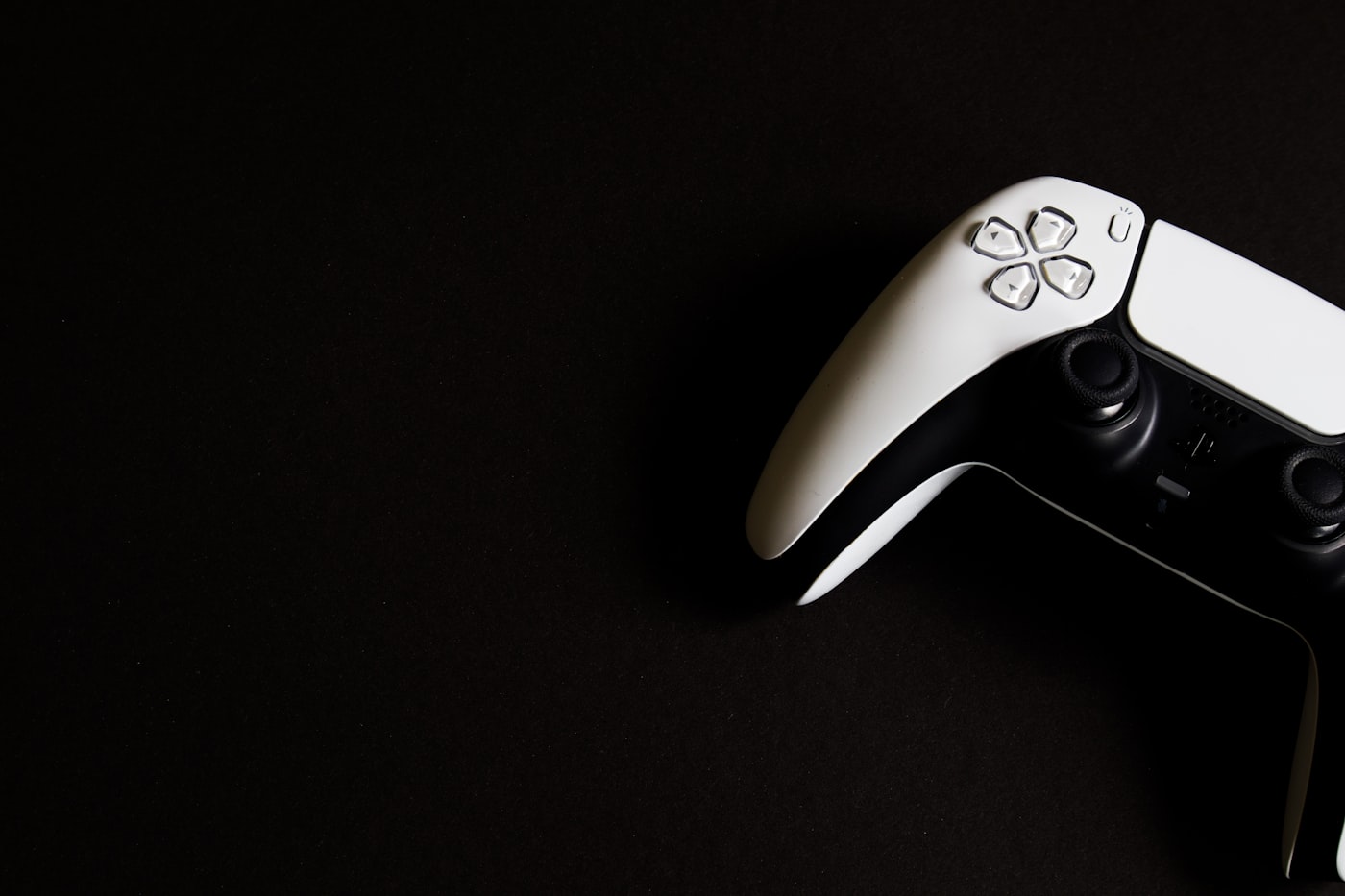
A PlayStation controller, representing Sony's diversified entertainment and gaming business
Sony's business spans far beyond audio — gaming, music and film all sit alongside its electronics division.
Round 04

Leadership & Corporate Strategy

Hiroki Totoki became President and CEO of Sony Group Corporation on April 1, 2025, succeeding Kenichiro Yoshida after a three-decade career inside the company that included stints as CFO and as president of Sony Mobile. Under Totoki, Sony has articulated a long-term "Creative Entertainment Vision" centered on IP, content creation and real-time technologies, continuing the entertainment-first pivot Yoshida began years earlier.

Lila Snyder joined Bose in 2020 after 15 years as a partner at McKinsey and an executive role at Pitney Bowes, and now serves as CEO overseeing all of Bose's consumer, automotive and professional businesses. Under her leadership Bose has pushed further beyond headphones — into self-fitting hearing aids and, in 2024, acquisitions of luxury audio brands McIntosh Laboratory and Sonus faber. Winner: Bose. Snyder has driven genuine category expansion at a much smaller, leaner company, while Totoki's tenure at the helm of Sony's sprawling portfolio is still in its early stages.

Round 05

Sponsorships & Partnerships

Sony's sponsorship footprint runs through its entertainment arms rather than classic team deals — Sony Pictures and Sony Music tie the brand to major films and recording artists worldwide, while its Alpha camera line is used by professional photographers and broadcasters at global sporting events, and PlayStation backs esports tournaments and gaming culture at scale.

Bose's strength here is narrower but deeper: it has been the official headset provider of the NFL since 2014, putting its logo on sideline headsets during every broadcast, and its aviation headsets are an industry standard among commercial and private pilots — a niche but highly credible technical endorsement few audio brands can claim. Winner: Bose, for sponsorship relationships that are directly tied to its core product category, rather than spread across a wider entertainment portfolio.

Round 06

Marketing Campaigns & Advertising

Sony's advertising has historically leaned on product spectacle and cultural cachet — Walkman and Trinitron campaigns in past decades, PlayStation's cinematic console-launch trailers today, and cross-promotion between its gaming, music and film divisions that few competitors can replicate because few competitors own all three.

Bose's marketing has always been quieter and more demonstration-led: in-store listening experiences (before most stores closed), detailed engineering explainers, and product-first campaigns built around its research credibility rather than lifestyle imagery. Winner: Sony, for the sheer scale and cross-media reach of its marketing machine, even though Bose's more understated, engineering-forward approach has built its own loyal following.

Round 07

Sustainability Initiatives

Sony's sustainability program, Road to Zero, launched back in 2010 and targets a zero environmental footprint across its entire product lifecycle and supply chain by 2050 — one of the longer-running, more ambitious environmental commitments among global electronics makers.

Bose's environmental reporting is smaller in scope but concrete: the company has reported cutting Scope 1 and Scope 2 carbon emissions by more than 5.5% against its baseline year, targets a 42% reduction by 2030, and recycles roughly 90% of its manufacturing waste. Winner: Sony, for the breadth and duration of a global program spanning a far larger manufacturing footprint, though Bose's numbers are respectable for a company a fraction of its size.

Plastic bottles collected for recycling, representing corporate sustainability and waste-reduction programs
Both companies report multi-year targets around emissions reduction and manufacturing waste recycling.
Round 08

Global Retail Footprint

Sony continues to operate a network of flagship retail spaces, including its long-running Sony Square venues in Tokyo, alongside broad third-party retail distribution worldwide for its electronics, gaming and audio products.

Bose took the opposite path: in January 2020 it announced it would close all 119 of its retail stores across North America, Europe, Japan and Australia, keeping a smaller footprint in markets like China and India while shifting almost entirely to e-commerce and retail partners such as Best Buy and Target. Winner: Bose, for the leaner, lower-overhead model — the store closures were framed around the reality that headphones, earbuds and speakers are now overwhelmingly bought online, and the shift let Bose redirect retail costs into R&D and newer categories like hearing aids.

Round 09

Digital Ecosystem & Apps

Sony's digital ecosystem is on a completely different scale: the PlayStation Network alone counts well over 100 million monthly active users, tied together with a Sony account, Bravia Core streaming for TVs, and a Sony Rewards loyalty program that spans its hardware and entertainment businesses.

Bose's digital footprint is limited to the Bose Music and Bose Connect apps, which handle device pairing, EQ settings and firmware updates for its headphones and speakers — useful and well-reviewed, but narrow by comparison. Winner: Sony, by an enormous margin, on the strength of PlayStation Network's scale alone.

Round 10

Corporate Culture & Ownership

Sony operates as a conventional, if large and complex, public company — an 11-member board with a strong majority of independent directors, no single controlling shareholder, and roughly 55–60% of its free float held by international investors.

Bose's ownership structure is genuinely unusual: founder Dr. Amar Bose donated the majority of the company's non-voting shares to MIT in 2011, meaning the university collects annual dividends but has no say in management, while voting control rests with the Bose Trust and company insiders. Winner: Bose, for a governance structure that insulates the company from quarterly-earnings pressure entirely and ties its success directly back to the research institution that shaped its founder.

A sound engineer operating an audio mixing console, representing the broader entertainment and audio production business
From film scoring to product tuning labs, both companies invest heavily in audio and entertainment production technology.
Round 11

Financial Health & Stability

Sony's fiscal year ended March 31, 2026 with revenue up 3.7% to ¥12.48 trillion and operating income of roughly ¥1.55 trillion, but the company posted a net loss for the period on a reported basis, and its stock — trading on both the NYSE and Tokyo Stock Exchange — carries the normal volatility of a public company with a market capitalization of roughly $126 billion as of April 2026.

Bose, insulated from public markets entirely, doesn't face quarterly earnings calls, activist investors, or stock-price swings. Winner: Bose. A private, debt-conservative structure with a single research-institution beneficiary gives it a stability public companies simply can't replicate, even if it also means Bose can't raise capital by issuing new shares the way Sony can.

Round 12 — Final

Overall Brand Reputation

This is the round that's genuinely hardest to call, because the two companies aren't really competing for the same title. Sony is a global entertainment and technology powerhouse — bigger by a huge margin, more culturally dominant through gaming, music and film, and home to a digital ecosystem few companies in any category can match. But that scale comes with public-market pressures, a sprawling portfolio to manage, and a leadership team still early in a new strategic chapter.

Bose is a fraction of the size, but it's a company that has stayed remarkably true to a single idea for 60 years: better sound through research, protected by an ownership structure that answers to no shareholders at all. It has quietly expanded into hearing aids and luxury audio while remaining debt-conservative and privately governed. If you're judging by scale and cultural reach, Sony wins. If you're judging by focus, stability and research culture, Bose is the more distinctive story.

Both remain respected names in audio and electronics with very different reasons for their staying power. Read more brand comparisons on our comparison tool or browse other coverage on our blog. Round result: it depends on what you're measuring.

The final scoreboard

12 rounds comparing Sony and Bose as companies. Both brands won meaningful categories. Here's how they stacked up.

Sony
★ Round Winner
5
Round wins · 2 ties
  • 01 · HistoryTie
  • 02 · Logo & Slogan✓ Win
  • 03 · Revenue & Portfolio✓ Win
  • 04 · LeadershipLoss
  • 05 · SponsorshipsLoss
  • 06 · Marketing✓ Win
  • 07 · Sustainability✓ Win
  • 08 · Retail FootprintLoss
  • 09 · Digital Ecosystem✓ Win
  • 10 · Culture & OwnershipLoss
  • 11 · Financial StabilityLoss
  • 12 · ReputationTie
VS
Bose
★ Round Winner
5
Round wins · 2 ties
  • 01 · HistoryTie
  • 02 · Logo & SloganLoss
  • 03 · Revenue & PortfolioLoss
  • 04 · Leadership✓ Win
  • 05 · Sponsorships✓ Win
  • 06 · MarketingLoss
  • 07 · SustainabilityLoss
  • 08 · Retail Footprint✓ Win
  • 09 · Digital EcosystemLoss
  • 10 · Culture & Ownership✓ Win
  • 11 · Financial Stability✓ Win
  • 12 · ReputationTie

The final verdict: two very different definitions of success

The Sony and Bose tie 5-5 with 2 ties across our 12 rounds, and that reflects something real: these companies aren't chasing the same goals. Sony wins on logo recognition, revenue scale, marketing reach, sustainability breadth, and digital ecosystem — it's the bigger, more culturally dominant company by nearly every conventional measure. Visit sony.com to explore more.

But here's the part a simple size comparison misses: Bose isn't trying to be Sony. It wins on leadership focus, sponsorship depth in its own category, a leaner retail model, a genuinely unusual ownership structure, and financial stability free from public-market pressure — a 60-year-old company that has stayed almost entirely focused on one craft. Visit bose.com to explore more.

Which brand you'd call the "winner" depends entirely on whether you're measuring scale and reach, or focus and independence. Read more brand comparisons on our comparison tool or browse other coverage on our blog.

Frequently asked questions

The questions readers ask most often about the Sony vs Bose comparison.

Which is bigger, Sony or Bose?

Sony is enormously bigger. Sony reported roughly $83 billion in revenue for the fiscal year ended March 31, 2026, while Bose — a private company that doesn't disclose current financials — is estimated at around $3 billion in annual revenue. Sony is a diversified global entertainment and electronics conglomerate; Bose is a much smaller, privately held audio specialist.

See more on each company at sony.com or bose.com.

Is Bose a public company?

No. Bose Corporation is privately held. Founder Dr. Amar Bose donated the majority of the company's non-voting shares to MIT in 2011; MIT receives annual dividends but has no role in managing the company. Voting control rests with the Bose Trust and company insiders, and Bose does not trade on any public stock exchange.

Who is the current CEO of Sony and Bose?

Hiroki Totoki has served as President and CEO of Sony Group Corporation since April 1, 2025, succeeding Kenichiro Yoshida. Lila Snyder is CEO of Bose Corporation, having joined the company in 2020 after roles at Pitney Bowes and McKinsey & Company.

Why did Bose close most of its retail stores?

In January 2020, Bose announced it would close all 119 of its stores across North America, Europe, Japan and Australia, citing a "dramatic shift" toward e-commerce for headphones, earbuds and speakers. It retained a smaller store presence in markets like China and India and now sells primarily through bose.com and retail partners.

Does Sony make more than just electronics?

Yes. Beyond consumer electronics and audio, Sony Group Corporation's businesses include PlayStation gaming and network services, Sony Music, Sony Pictures film and television, image sensors used across the smartphone industry, and a financial services division — making it one of the most diversified entertainment and technology companies in the world.

Get our weekly buying guides

Honest comparison reviews like this one, plus the best deals on the products we test. No spam, ever — unsubscribe in one click.