
Nike vs. Adidas: Which Sportswear Giant Wins?

This isn't a shoe review. We compared Nike and Adidas as companies — history, leadership, revenue, sponsorships, sustainability, retail footprint and culture — across 12 rounds. Here's how the two biggest names in sportswear actually stack up in 2026.

PR
Priya Raman
Senior Brand & Business Editor · 11 years covering consumer brands
386 comments 8.1k shares

Nike and Adidas have been circling each other for more than half a century, and 2026 is a genuinely interesting moment to compare them. Nike is still the larger company by revenue and the more culturally dominant brand in the United States, but it's also mid-turnaround, working through leadership changes, layoffs, and a stock price that's had a rough year. Adidas, meanwhile, is coming off its strongest year in over a decade under CEO Bjørn Gulden, having clawed back from a genuine crisis in 2022 and 2023.

This comparison deliberately leaves products out of it — no shoe models, no sneaker drops. What follows is 12 rounds comparing Nike and Adidas purely as companies: their histories, leadership, financials, sponsorships, marketing, sustainability commitments, retail footprints, and cultural standing. If you want to browse either brand directly, you can visit nike.com or adidas.com.

Nike, Inc.

  • Founded 1964, as Blue Ribbon Sports
  • Founders Phil Knight & Bill Bowerman
  • Headquarters Beaverton, Oregon, USA
  • CEO Elliott Hill (since Oct 2024)
  • FY2026 revenue $46.4 billion
  • Stock ticker NYSE: NKE
  • Famous slogan "Just Do It" (1988)
  • Sub-brands Jordan Brand, Converse

Adidas AG

  • Founded 1949, by Adolf "Adi" Dassler
  • Headquarters Herzogenaurach, Germany
  • CEO Bjørn Gulden (since Jan 2023)
  • 2025 revenue €24.8 billion (record)
  • Stock ticker FWB: ADS
  • Famous slogan "Impossible Is Nothing"
  • Notable stake 8.33% of Bayern Munich
  • FIFA status Tier 1 Partner since 1970
Round 01

Company Origins & History

Adidas is the older company by 15 years. Adolf "Adi" Dassler founded it in Herzogenaurach, Germany in 1949, after splitting from his brother Rudolf, who went on to found rival brand Puma in the same small town — the falling-out was so bitter that locals nicknamed Herzogenaurach "the town of bent necks" because people would glance down at strangers' shoes to see which brother's side they were on.

Nike started life in 1964 as Blue Ribbon Sports, a distributor for Japanese shoemaker Onitsuka Tiger, founded by University of Oregon runner Phil Knight and his track coach Bill Bowerman. The company didn't become "Nike, Inc." — named for the Greek goddess of victory — until 1971, when it split from its Japanese supplier. Winner: Tie. Adidas has the longer, more continuous brand history; Nike's founding myth (a coach experimenting with a waffle iron, a runner turned businessman) is arguably the more culturally resonant one in America.

Round 02

Logo, Identity & Slogan

Nike's Swoosh was designed in 1971 by Portland State design student Carolyn Davidson, who was paid $35 for it at the time (Phil Knight later gave her an undisclosed number of company shares as a thank-you). Paired with "Just Do It," launched in 1988, it's routinely ranked among the most recognizable logo-and-slogan combinations in the world.

Adidas's Three Stripes actually predate the company itself as an Adidas asset — Dassler purchased the design from Finnish sports brand Karhu in 1952 for roughly the equivalent of €1,600 and two bottles of whiskey. Paired with the 2004 slogan "Impossible Is Nothing," it's one of the few marks that rivals the Swoosh for instant global recognition. Winner: Nike, narrowly — brand-value studies consistently place Nike's logo and tagline slightly ahead in raw recognition and estimated brand value, though Adidas's stripes have their own devoted following.

Round 03

Global Revenue & Market Position

By sheer scale, this round isn't close. Nike reported $46.4 billion in revenue for fiscal year 2026 (ended May 31, 2026), roughly flat on a reported basis after a rough couple of years that saw revenue decline from a 2024 peak of $51.4 billion. Nike remains the largest sportswear company in the world by a wide margin.

Adidas posted record 2025 revenue of €24.8 billion (roughly $28-29 billion), up double digits and its strongest year in over a decade — but that's still little more than half of Nike's top line. Adidas is comfortably the largest sportswear manufacturer in Europe and the world's second-largest overall, behind only Nike. Winner: Nike, on scale alone, even with its recent slowdown.

Group of athletes running on a stadium track, representing global sports sponsorship
Both companies build their brands around athletes and events, from the Olympics to the FIFA World Cup.
Round 04

Leadership & Corporate Strategy

Elliott Hill returned to Nike as President and CEO in October 2024 after a 32-year Nike career and a brief retirement, brought back specifically to fix a company that had leaned too hard into direct-to-consumer sales at the expense of wholesale relationships. The turnaround has been slower than investors hoped: Nike cut roughly 800 jobs in January 2026 and another 1,400 in April 2026, mostly in technology, and Hill has publicly described the company as being in "cleanup mode."

Bjørn Gulden took over Adidas in January 2023 under much rockier circumstances — the collapse of the Yeezy partnership had left the company with over €1 billion in unwanted inventory and its first annual loss since 1992. Three years later, Adidas's supervisory board extended his contract through 2030, crediting him with a full commercial recovery. Winner: Adidas. Gulden inherited a genuine crisis and delivered record results in three years; Hill inherited a healthier business and is still mid-turnaround.

Round 05

Athlete & Team Sponsorships

Nike's endorsement roster leans heavily on individual superstar athletes — historically Michael Jordan, LeBron James, Serena Williams, Tiger Woods and Cristiano Ronaldo, among many others — and Nike is the primary uniform and footwear supplier for a wide range of major U.S. leagues and college programs.

Adidas's strength runs deeper in global football specifically: it has been a FIFA Tier 1 partner since 1970, supplies the official match ball for the 2026 World Cup, sponsors national federations including Germany and Argentina, holds an 8.33% equity stake in Bayern Munich, and in January 2025 added a multi-year Formula One partnership with Mercedes. Winner: Adidas, for the sheer institutional depth of its football and motorsport relationships, even though Nike's individual-athlete roster remains arguably more famous in the U.S.

Round 06

Marketing Campaigns & Advertising

"Just Do It" has anchored Nike's advertising for nearly four decades and is widely considered one of the most effective taglines in advertising history. Nike has also built a reputation for embracing culturally and politically charged storytelling in its campaigns, a strategy that has generated both intense loyalty and real controversy at different points.

Adidas leans more on heritage and product-culture storytelling — "Impossible Is Nothing," the ongoing revival of Originals-era silhouettes like Samba and Gazelle, and tightly choreographed activations around major football tournaments. Winner: Nike. "Just Do It" remains the more universally recognized piece of sports marketing, and Nike's willingness to take creative risks has kept it culturally relevant across generations.

Round 07

Sustainability Initiatives

Nike's sustainability push is organized under its Move to Zero initiative, launched in 2019, targeting zero carbon and zero waste across its supply chain, with recycled and more sustainably sourced materials worked into an increasing share of its output.

Adidas's flagship program predates Nike's by four years: its partnership with ocean-conservation group Parley for the Oceans, running since 2015, turns recovered ocean plastic into performance fabric, and Adidas has since layered in broader commitments around recycled polyester and end-of-life recyclability. Winner: Adidas, on the strength of a longer track record — the Parley partnership has been running for over a decade and is one of the more widely cited corporate ocean-plastic programs in any industry.

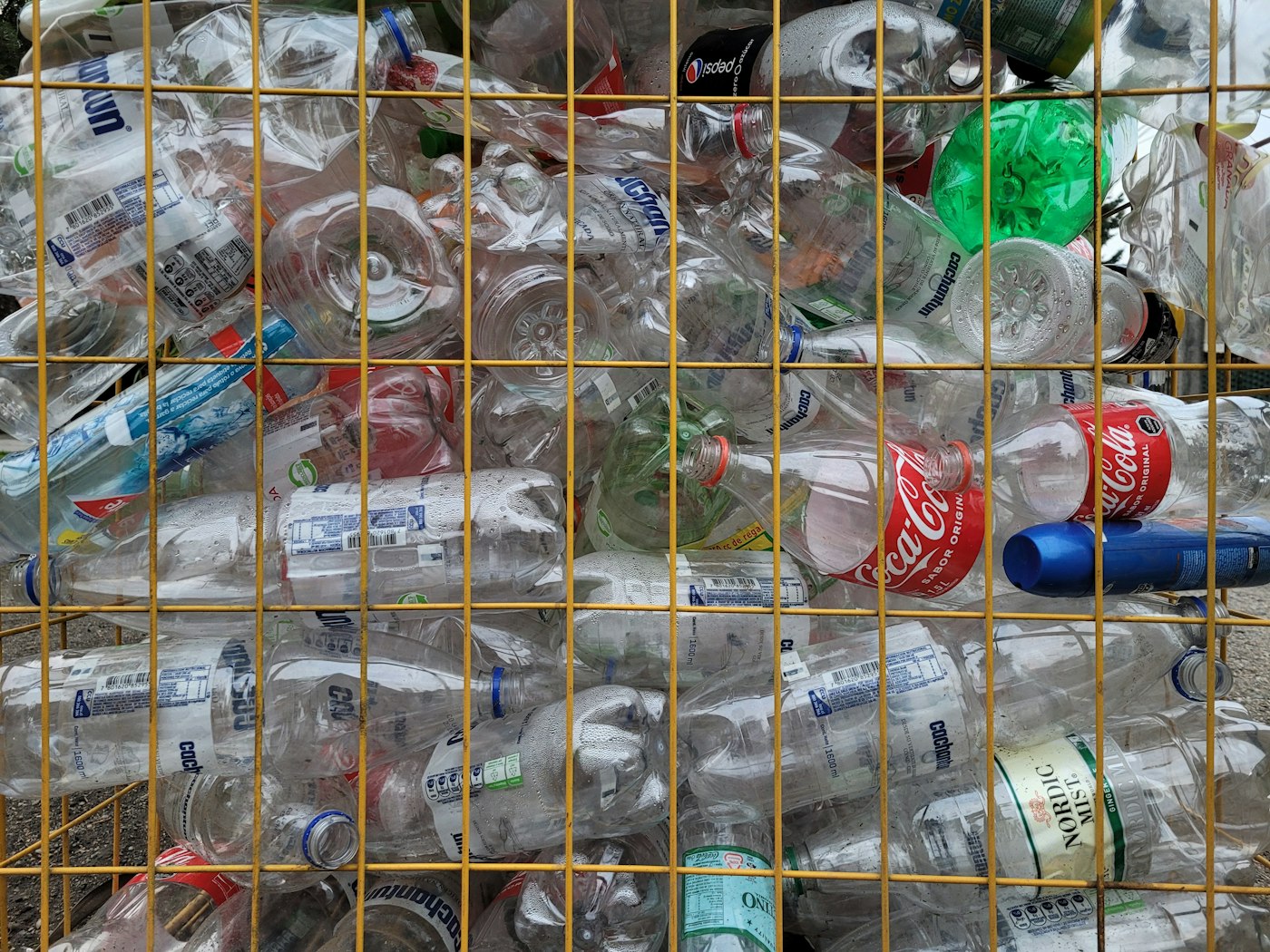
Plastic bottles collected for recycling, representing ocean-plastic sustainability partnerships
Both companies have built multi-year sustainability programs around recycled and ocean-recovered materials.
Round 08

Global Retail Footprint

Nike has spent the last several years leaning into direct-to-consumer, though its recent Q4 FY2026 results show that strategy correcting course: wholesale revenue rose 4% to $6.6 billion while Nike Direct revenue (its own stores and digital channels) fell 7% to $4.1 billion, as Hill rebuilds relationships with retail partners Nike had previously de-prioritized.

Adidas operates a larger network of owned retail locations globally and, under Gulden, has deliberately rebalanced toward a healthier mix — both its direct-to-consumer and wholesale channels grew 5% in 2025, a sign of a more evenly built retail strategy. Winner: Adidas, for a broader owned-store footprint and a more balanced, currently-growing retail mix on both channels at once.

Round 09

Digital Ecosystem & Apps

Nike's app portfolio is the more mature of the two: the Nike App, Nike Training Club, Nike Run Club, and the SNKRS release app together form a genuinely broad ecosystem spanning fitness tracking, coaching content, community features, and members-only product drops, all tied into a single Nike Membership account.

Adidas has its own app plus Runtastic, a digital fitness-tracking platform it acquired in 2015 and has continued to develop, alongside its Confirmed app for release drops. Winner: Nike, for a broader, more tightly integrated digital ecosystem that ties training content, community, and membership together more seamlessly than Adidas's comparatively more fragmented app lineup.

Round 10

Corporate Culture & Workplace

Nike's Beaverton headquarters is a genuine cultural institution inside the company — dozens of buildings named after sponsored athletes, an internal museum, running loops built into the campus layout, and in 2026 a new annual "Founder's Week" tradition intended to rally employees around the company's roots during a turbulent stretch.

Adidas operates under Germany's co-determination system, meaning roughly half its supervisory board seats are employee-elected by law — a structurally different, more consensus-driven governance model than Nike's. Winner: Nike, for a workplace culture and physical campus that's more distinctive and more central to its public identity, even as the company navigates layoffs and a leadership reset.

People walking through a shopping mall, representing global retail presence
Both brands lean heavily on physical retail alongside digital and wholesale channels to reach shoppers worldwide.
Round 11

Financial Health & Stock Performance

Nike's stock has had a difficult stretch — after trading around a market capitalization of roughly $86 billion in March 2026, Bloomberg reported the shares had fallen more than 40% by June 2026 as Hill's turnaround took longer than investors hoped, with the company also flagging up to $1.5 billion in tariff-related costs for the fiscal year.

Adidas, by contrast, posted record 2025 operating profit of €2.1 billion, up 54% year-over-year, and guided for continued high-single-digit currency-neutral revenue growth in 2026. Winner: Adidas. On trajectory and momentum right now, Adidas is having the stronger run, even though Nike remains the larger company overall.

Round 12 — Final

Overall Brand Reputation

This is the round that's genuinely hardest to call, and it's a split decision. Nike is still, by a wide margin, the world's largest and most valuable sportswear company — bigger revenue, a more culturally dominant U.S. presence, a broader digital ecosystem, and a marketing legacy few brands in any category can match. But it's also a company visibly working through a difficult stretch, with layoffs, a struggling stock, and a turnaround that's taking longer than planned.

Adidas is smaller, but it's the company with momentum right now: a genuine crisis-to-record-profit turnaround in three years, deeper institutional roots in global football, a longer-running sustainability partnership, and a more balanced retail strategy. If you're judging by size and legacy, Nike wins. If you're judging by current trajectory and execution, Adidas is having the better year.

Both remain generational companies with enormous global reach. Read more brand comparisons on our comparison tool or browse other coverage on our blog. Round result: it depends on what you're measuring.

The final scoreboard

12 rounds comparing Nike and Adidas as companies. Both brands won meaningful categories. Here's how they stacked up.

Nike
★ Round Winner
5
Round wins · 2 ties
  • 01 · HistoryTie
  • 02 · Logo & Slogan✓ Win
  • 03 · Revenue & Position✓ Win
  • 04 · LeadershipLoss
  • 05 · SponsorshipsLoss
  • 06 · Marketing✓ Win
  • 07 · SustainabilityLoss
  • 08 · Retail FootprintLoss
  • 09 · Digital Ecosystem✓ Win
  • 10 · Culture✓ Win
  • 11 · Financial HealthLoss
  • 12 · ReputationTie
VS
Adidas
★ Round Winner
5
Round wins · 2 ties
  • 01 · HistoryTie
  • 02 · Logo & SloganLoss
  • 03 · Revenue & PositionLoss
  • 04 · Leadership✓ Win
  • 05 · Sponsorships✓ Win
  • 06 · MarketingLoss
  • 07 · Sustainability✓ Win
  • 08 · Retail Footprint✓ Win
  • 09 · Digital EcosystemLoss
  • 10 · CultureLoss
  • 11 · Financial Health✓ Win
  • 12 · ReputationTie

The final verdict: a genuine tie, decided by what you're measuring

The Nike and Adidas tie 5-5 with 2 ties across our 12 rounds, and that reflects reality: these are the two biggest names in global sportswear, built on very different strengths right now. Nike wins on logo recognition, revenue scale, marketing legacy, digital ecosystem, and workplace culture — it's still the bigger, more culturally dominant company, even mid-turnaround. Visit nike.com to explore more.

But here's the part most head-to-heads skip: "bigger" doesn't mean "currently winning." Adidas wins on leadership execution, sponsorship depth, sustainability track record, retail balance, and financial momentum — a company that turned a genuine 2022-23 crisis into record 2025 profits in three years. Visit adidas.com to explore more.

Which brand you'd call the "winner" depends entirely on whether you're measuring size and legacy, or trajectory and momentum. Read more brand comparisons on our comparison tool or browse other coverage on our blog.

Frequently asked questions

The questions readers ask most often about the Nike vs Adidas corporate rivalry.

Which is bigger, Nike or Adidas?

Nike is significantly bigger. Nike reported $46.4 billion in revenue for fiscal year 2026, while Adidas posted a record €24.8 billion (roughly $28-29 billion) in 2025. Nike is the world's largest sportswear company; Adidas is the second-largest globally and the largest in Europe.

See more on each company at nike.com or adidas.com.

Who is winning the Nike vs Adidas rivalry in 2026?

It depends on the measure. Nike remains far larger by revenue and cultural presence, but its stock has struggled through 2026 amid an ongoing turnaround under CEO Elliott Hill. Adidas is smaller but has real momentum, posting record 2025 profits under CEO Bjørn Gulden after recovering from a serious 2022-23 crisis.

Which company has better sustainability credentials, Nike or Adidas?

Both have credible, long-running programs. Nike's Move to Zero initiative (2019) targets zero carbon and zero waste across its supply chain. Adidas's partnership with Parley for the Oceans (2015) is one of the longer-running ocean-plastic sourcing programs in any industry, giving Adidas a slight edge on track record.

Why did Adidas recover so strongly after 2023?

Adidas's 2022 termination of its Yeezy partnership left the company with over €1 billion in unsold inventory and its first annual loss since 1992. CEO Bjørn Gulden, who joined in January 2023 after previously turning around Puma, rebuilt retailer relationships, cleaned up inventory, and refocused on core product lines — delivering record revenue and a 54% jump in operating profit by 2025.

Is Nike still the world's largest sportswear company?

Yes. Even after a multi-year revenue decline from its FY2024 peak of $51.4 billion, Nike's $46.4 billion in FY2026 revenue keeps it well ahead of Adidas and every other global competitor. Nike's challenges in 2026 have been more about stock performance and turnaround pace than its position as the industry's largest player.

Get our weekly buying guides

Honest comparison reviews like this one, plus the best deals on the products we test. No spam, ever — unsubscribe in one click.