Galaxy Z Fold7 vs. Pixel 10 Pro Fold: Which Foldable Wins?

We compared both foldables across 12 rounds — design, display, performance, cameras, battery, software, and ecosystem. Both have been replaced by newer models this year, so price and everyday feel matter as much as the specs.

SP
Sam Park
Senior Mobile Editor · 11 years reviewing smartphones
173 comments 4.9k shares

Foldables finally have a real rivalry. In 2025 the Galaxy Z Fold7 and the Pixel 10 Pro Fold arrived within three months of each other, and they made opposite bets. The Samsung Galaxy Z Fold7 chased thinness and speed: 4.2 mm unfolded, 215 g, a 200MP camera, and a Snapdragon 8 Elite chip. The Google Pixel 10 Pro Fold chased durability and battery: the first foldable with an IP68 rating, a 5,015 mAh cell, and magnetic Qi2 charging, at a thicker, heavier 258 g.

Both are last year's models now. Samsung launched the Galaxy Z Fold8 Ultra (the Fold7's direct successor, at $2,099.99) and a wider Galaxy Z Fold8 ($1,899) on July 22, 2026. Google followed with the Pixel 11 Pro Fold on August 20, 2026, also at $1,899. That pushes the older pair into value territory: the Fold7 launched at $1,999.99 and the Pixel 10 Pro Fold at $1,799, and both have been discounted by about $300 at major retailers.

This isn't a "spec sheet showdown" review. Spec sheets don't tell you which foldable you'll actually enjoy carrying. What follows is 12 rounds of head-to-head comparison across the categories that matter — design, display, performance, cameras, battery, charging, software, AI, ecosystem, and the one thing that turns out to decide the whole result. Everything here is built on official specs from Samsung and Google, published pricing, and independent lab results from Tom's Guide where noted. If you're shopping right now, check current offers on our deals page or browse more matchups in our comparison tool.

Samsung Galaxy Z Fold7

  • Display 8" LTPO AMOLED 2184 × 1968, 120Hz
  • Cover display 6.5" FHD+ 21:9, 120Hz
  • Chip Snapdragon 8 Elite for Galaxy, 12 GB RAM
  • Main camera 200MP, f/1.7
  • Telephoto 10MP, 3x optical
  • Battery 4,400 mAh
  • Charging 25W wired / 15W wireless
  • Weight 215 g (8.9 mm folded)
  • Durability IP48 (water only, no dust rating)
  • Starting price $1,999.99 at launch

Google Pixel 10 Pro Fold

  • Display 8" LTPO OLED 2076 × 2152, 120Hz
  • Cover display 6.4" OLED, 120Hz
  • Chip Google Tensor G5, 16 GB RAM
  • Main camera 48MP, f/1.7
  • Telephoto 10.8MP, 5x optical
  • Battery 5,015 mAh
  • Charging 30W wired / 15W Qi2 magnetic
  • Weight 258 g (10.8 mm folded)
  • Durability IP68 (dust + water)
  • Starting price $1,799 at launch
Round 01

Design & Build Quality

The Fold7 is the thinner, lighter phone by a wide margin. The Galaxy Z Fold7 weighs 215 g and measures 8.9 mm folded and 4.2 mm unfolded — lighter than a Galaxy S25 Ultra. It pairs an aluminum frame with Gorilla Glass Victus 2 on the back and Gorilla Glass Ceramic 2 on the cover screen.

The Pixel 10 Pro Fold is the tougher one: 258 g, 10.8 mm folded, and 5.2 mm unfolded, but with a new gearless hinge that lets it earn IP68 — the first foldable fully rated against dust and water. Samsung's IP48 means water resistance but no dust protection. Tom's Guide said it would carry the Samsung every day for its slim, regular-phone feel. Round result: Tie. Samsung wins on portability, Google wins on protection.

Round 02

Display

Both phones have an 8-inch inner display at 120 Hz, and the resolutions are close: 2184 × 1968 on the Fold7, 2076 × 2152 on the Pixel. The difference is brightness. In Tom's Guide's lab testing, the Pixel's inner screen reached about 2,566 nits against 2,245 nits for the Samsung, and the Pixel's cover screen is brighter too. Google rates both of its screens for up to 3,000 nits of peak brightness.

The covers differ in shape: Samsung's 6.5-inch cover screen is taller and narrower (21:9), while the Pixel's 6.4-inch cover is wider and easier to type on. Samsung's display has the more accurate and saturated color modes in Tom's testing,. Round result: Pixel 10 Pro Fold, for the brighter screens — especially outdoors.

Round 03

Performance & Chip

This is the Fold7's clearest win. It runs the Snapdragon 8 Elite for Galaxy, the same chip as the Galaxy S25 series, with 12 GB of RAM (16 GB on the 1 TB model). The Pixel uses Google's Tensor G5 with 16 GB of RAM, built for on-device AI rather than raw speed.

The gap shows in testing. Tom's Guide measured Geekbench multi-core scores of roughly 9,735 on the Fold7 versus 6,332 on the Pixel, and a video transcoding test that took 52 seconds on the Samsung and 2 minutes 18 seconds on the Pixel. In games the Pixel dropped frames in busy scenes. For everyday scrolling and apps you won't feel it, but for gaming and heavy editing, Round result: Galaxy Z Fold7, clearly.

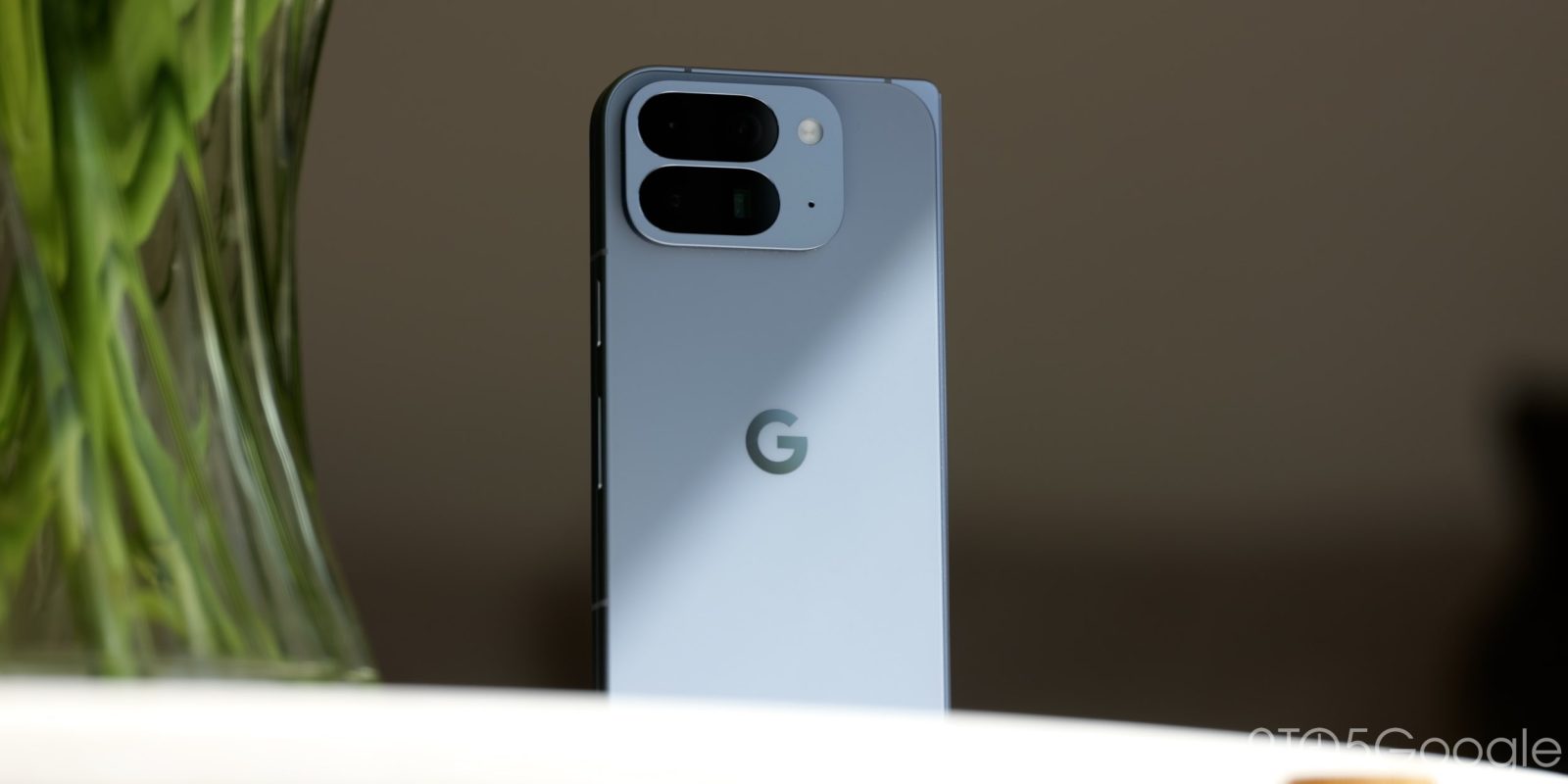
Google Pixel 10 Pro Fold camera bar with 48MP main, 10.5MP ultra-wide, and 10.8MP 5x telephoto cameras
Camera hardware: the Pixel 10 Pro Fold uses a 48MP main sensor with a 5x telephoto; the Fold7 uses a 200MP main with a 3x telephoto.
Round 04

Main Camera

On paper this looks lopsided: the Fold7's 200MP main camera (the same sensor class as the Galaxy S25 Ultra) against the Pixel's 48MP. In practice it's much closer. Samsung also has a 12MP ultra-wide and a 10MP 3x telephoto; Google has a 10.5MP ultra-wide with macro focus and a 10.8MP 5x telephoto. Both have 10MP cameras on the cover and inner screens.

Tom's Guide preferred the Pixel's shots in a number of comparisons, including a crisper portrait, better low-light scenes, and more accurate color, while the Samsung produced nicer background blur and more detailed macro shots. Neither is a clear leader. Round result: Tie. The Fold7 has more resolution to crop into; the Pixel has better processing.

Round 05

Zoom Photography

The Pixel 10 Pro Fold has the better telephoto. Its 5x optical lens (10.8MP, f/3.1) beats the Fold7's 3x optical (10MP) in reach, and in Tom's Guide's side-by-side shots at 10x the Pixel showed noticeably more detail on a distant sculpture. Google can also push to much higher zoom levels using AI-assisted processing.

The Fold7 offers a longer digital zoom range, up to 30x, but the results at that level are generally not impressive. For anyone who shoots concerts, sports, wildlife, or architecture details, Round result: Pixel 10 Pro Fold. If you mostly shoot people and everyday scenes at 1x to 3x, you won't notice.

Round 06

Video Recording

Samsung takes this round. The Galaxy Z Fold7 can record 8K video at 30 fps, and in Tom's Guide's 4K test at a busy fountain, its footage looked better: the Pixel took a moment to refocus as the shot zoomed in, and it had trouble keeping the scene evenly lit while panning.

The Pixel 10 Pro Fold records excellent video in good light and offers Google's cloud-based Video Boost for improved low-light clips, plus a set of foldable-specific camera tools. For casual clips both are fine. For anyone who shoots video regularly, Round result: Galaxy Z Fold7.

Google Pixel 10 Pro Fold on a magnetic Qi2 charging accessory
Battery and charging: the Pixel 10 Pro Fold has built-in magnets for Qi2 wireless charging; the Fold7 needs a magnetic case for the same trick.
Round 07

Battery Life

The Pixel's extra thickness buys a bigger battery: 5,015 mAh against 4,400 mAh in the Fold7. That translated to real endurance in Tom's Guide's web-surfing test over 5G: 12 hours 16 minutes on the Pixel against 10 hours 44 minutes on the Samsung, about 90 minutes more.

Both phones last a full day for most people, but foldables run big screens, and that's where a larger battery matters. If you stream video on the inner display, play games, or travel a lot, the Pixel gives you more margin at the end of the day. Round result: Pixel 10 Pro Fold.

Round 08

Charging Speed

Neither phone charges especially fast by 2026 standards, but the Pixel edges ahead. The Pixel 10 Pro Fold supports 30W wired charging and 15W Qi2 wireless charging with built-in magnets that snap onto Pixelsnap accessories. The Fold7 supports 25W wired, 15W wireless, and 4.5W reverse wireless charging, but it needs a magnetic case to use Qi2 magnetic accessories.

In Tom's Guide's test, the Pixel reached about 58% in 30 minutes versus 54% for the Samsung. Neither ships with a charger in the box. Round result: Pixel 10 Pro Fold, thanks to the magnets and slightly faster wired charging.

Round 09

Software & Updates

On update promises, these two are a dead heat: both phones launched with Android 16 and both come with 7 years of OS and security updates. Where they differ is how the software uses a big screen. Samsung's One UI 8 is built for foldables, and it can run three apps at once, with flexible split-screen layouts and a polished desktop mode.

The Pixel runs a cleaner Android with faster Pixel Drop updates, but it's limited to two apps side by side. It's easy to set up app pairs and drag content between windows, but it's less ambitious as a pocket tablet. For anyone who wants their foldable to replace a tablet, Round result: Galaxy Z Fold7.

Round 10

AI Features

Both phones have Gemini and share many of the best AI tools — Gemini Live for analyzing what's on screen, Circle to Search, and AI photo editing — so this round is closer than the marketing suggests. Samsung adds its Galaxy AI tools across the camera, keyboard, and apps.

Google's advantage is a set of exclusives that make use of the foldable form: Instant View to see photos as you take them, Dual Screen Preview for framing on the cover screen, Camera Coach, Auto Best Take, and Magic Cue, which surfaces information at the right moment. Magic Cue didn't work consistently in Tom's Guide's testing, but the camera tools did. Round result: Pixel 10 Pro Fold, on breadth.

Round 11

Ecosystem

Samsung has the deeper ecosystem for an Android phone. The Fold7 works with Galaxy Watch, Galaxy Buds, Galaxy Tab, SmartThings, and Windows PCs, and Samsung's DeX mode turns the phone into a desktop-style workspace when you plug it into a monitor. If you already own Samsung gear, the Fold7 connects to it more tightly than the Pixel connects to anything.

Google's ecosystem is simpler and works well across Android: Pixel Watch, Pixel Buds, Quick Share, and Pixelsnap magnetic accessories, plus deep integration with Google accounts and Workspace. It's more open, but less deep. Round result: Galaxy Z Fold7, for the broader hardware and software ecosystem.

Samsung Galaxy Z Fold7 in everyday use — a slim foldable that carries like a regular phone
Everyday use: for most people, the real difference between these two foldables is how they feel in the hand and the pocket.
Round 12 — Final

Real-World Daily Use

This is the round that matters most, and it doesn't have a clean winner. The Pixel 10 Pro Fold wins more categories in this comparison — display, zoom, battery, charging, and AI — and it's usually cheaper. But the Galaxy Z Fold7 is the foldable that feels like a normal phone when it's closed: 43 g lighter, 1.9 mm thinner, and narrower in the hand. Tom's Guide put it simply: it would carry the Samsung every day, even while rating the Pixel as a better value.

The decision comes down to what you value. If you want the sturdier phone, the better battery, the longer zoom, and the lower price, buy the Pixel 10 Pro Fold. If you want the slimmer, lighter, faster foldable with the more powerful multitasking, buy the Galaxy Z Fold7. Round result: It depends on you.

The final scoreboard

12 rounds of head-to-head comparison. Both foldables won meaningful categories. Here's how they stacked up.

Samsung
4
Round wins · 3 ties
  • 01 · DesignTie
  • 02 · DisplayLoss
  • 03 · Performance✓ Win
  • 04 · Main CameraTie
  • 05 · ZoomLoss
  • 06 · Video✓ Win
  • 07 · BatteryLoss
  • 08 · ChargingLoss
  • 09 · Software✓ Win
  • 10 · AILoss
  • 11 · Ecosystem✓ Win
  • 12 · Daily UseTie
VS
Google
★ Round Winner
5
Round wins · 3 ties
  • 01 · DesignTie
  • 02 · Display✓ Win
  • 03 · PerformanceLoss
  • 04 · Main CameraTie
  • 05 · Zoom✓ Win
  • 06 · VideoLoss
  • 07 · Battery✓ Win
  • 08 · Charging✓ Win
  • 09 · SoftwareLoss
  • 10 · AI✓ Win
  • 11 · EcosystemLoss
  • 12 · Daily UseTie

The final verdict: Pixel 10 Pro Fold wins on paper, Galaxy Z Fold7 wins on feel

The Google Pixel 10 Pro Fold wins the spec-sheet showdown 5-4 with 3 ties. It has the brighter screens, the longer zoom, the bigger battery, the magnetic charging, the first IP68 rating on a foldable, and a $200 lower launch price. If you want the sturdier, better-value foldable, the Pixel 10 Pro Fold is the one to beat.

But here's the honest truth most reviews won't give you: "wins more rounds" doesn't mean "better to live with". The Galaxy Z Fold7 is dramatically thinner and lighter, runs a much faster chip, records better video, and multitasks more like a tablet. It's the foldable that slips into a front pocket and feels like a normal phone — and that's what many people want. If portability matters most, the Galaxy Z Fold7 is the easier choice. Want the latest hardware instead? Look at the Galaxy Z Fold8 Ultra or Pixel 11 Pro Fold.

The right foldable for you depends on whether you value pocketability or toughness more. Read more comparisons on our comparison tool or browse other flagships on our Electronics category page.

Frequently asked questions

The questions our readers ask most often when choosing between Samsung and Google foldables.

Should I buy the Galaxy Z Fold7 or the Pixel 10 Pro Fold in 2026?

It comes down to weight versus toughness. The Fold7 is 215 g and 8.9 mm thick when closed, so it carries like a regular phone and it's the faster performer. The Pixel is 258 g and 10.8 mm, but it has an IP68 rating, a bigger battery, brighter screens, and a longer zoom — and it launched $200 cheaper.

If you're hard on phones or care about battery and value, pick the Pixel 10 Pro Fold. If you want the slimmest, fastest foldable and use it as a tablet replacement, pick the Galaxy Z Fold7.

Should I buy these, or the Galaxy Z Fold8 or Pixel 11 Pro Fold?

Samsung launched the Galaxy Z Fold8 Ultra ($2,099.99) and a wider, passport-style Galaxy Z Fold8 ($1,899) on July 22, 2026. Google launched the Pixel 11 Pro Fold on August 20, 2026 at $1,899 with a Tensor G6 chip. Samsung attributed some of its price increases to rising memory costs.

Honest take: the newer foldables are better, but they cost more. If you want the newest hardware, buy the new model. If you want the best value, the previous generation is where the discounts are — see our deals page for current offers.

Which foldable is more durable?

On paper, the Pixel 10 Pro Fold. It has an IP68 rating, meaning it's sealed against dust and can handle submersion in water, and Google says its gearless hinge is rated for over 10 years of folding. The Galaxy Z Fold7 is rated IP48: it handles water, but fine dust can get in.

Remember that an IP rating doesn't cover drops, scratches on the inner screen, or hinge wear, and foldables are more fragile than regular phones in all of those areas. A case and a protection plan are worth considering on either.

Which one feels better to use as a regular phone?

The Galaxy Z Fold7 is narrower (72.8 mm) and lighter, so it works better one-handed and fits pockets more easily. Its cover screen is a tall 21:9 shape. The Pixel's cover screen is wider (the phone is 76.3 mm wide), which makes typing and watching video easier, but the phone is noticeably heavier in the hand.

Tom's Guide called the Pixel a "back pocket phone" and the Samsung slim enough for the front. Try both in a store if you can — the shape matters more than the specs.

How long will these phones get software updates?

Both get 7 years of OS and security updates, and both launched with Android 16. That means support into 2032 on both phones — longer than the typical lifetime of a foldable's hinge and battery.

Pixel phones tend to get new Android versions and Pixel Drops a little faster, while Samsung's One UI adds more foldable-specific features such as three-app multitasking. See each company's pages for the official update commitments on the Fold7 and the Pixel 10 Pro Fold.

Get our weekly buying guides

Honest comparison reviews like this one, plus the best deals on the products we test. No spam, ever — unsubscribe in one click.