Dyson vs. Shark: Which Home Appliance Giant Wins?

This isn't a vacuum review. We compared Dyson and Shark (SharkNinja) as companies — history, leadership, revenue, innovation, sustainability, retail footprint and culture — across 12 rounds. Here's how the two biggest names in home cleaning tech actually stack up in 2026.

PR
Priya Raman
Senior Brand & Business Editor · 11 years covering consumer brands
241 comments 5.4k shares

Dyson and Shark have been fighting over the same carpet for the better part of two decades, and 2026 is a genuinely interesting moment to compare them. Dyson is still the more premium, more recognized engineering brand worldwide, privately held and famously secretive about its numbers. Shark, meanwhile, is the cleaning half of publicly traded SharkNinja — a company that has quietly grown into a $6-billion-plus appliance juggernaut spanning vacuums, kitchen gadgets and beauty tools, all while trading on the New York Stock Exchange in full public view.

This comparison deliberately leaves product reviews out of it — no suction tests, no side-by-side unboxings. What follows is 12 rounds comparing Dyson and Shark purely as companies: their histories, leadership, financials, innovation pipelines, marketing, sustainability commitments, retail footprints, and cultural standing. If you want to browse either brand directly, you can visit dyson.com or sharkclean.com.

Dyson Limited

  • Founded 1991, by Sir James Dyson
  • Headquarters Singapore (since 2019)
  • CEO Hanno Kirner (since Feb 2024)
  • 2025 revenue £6.1 billion (~$8.2B)
  • Ownership Privately held, family-owned
  • Employees 14,000+ worldwide
  • Known for Cyclone bagless technology
  • Core categories Vacuums, air, hair care, lighting

Shark (SharkNinja, Inc.)

  • Founded 1994, by Mark Rosenzweig
  • Headquarters Needham, Massachusetts, USA
  • CEO Mark Barrocas (since 2016; joined 2008)
  • 2025 revenue $6.4 billion (SharkNinja)
  • Stock ticker NYSE: SN (since July 2023)
  • Market cap ~$17.4 billion
  • Known for Value-driven rapid innovation
  • Core categories Cleaning, cooking, beauty (Ninja + Shark)
Round 01

Company Origins & History

Dyson traces back to 1979, when a frustrated James Dyson began tinkering with a bagless vacuum after noticing his own Hoover kept losing suction as its bag clogged with dust. After building roughly 5,127 prototypes over five years using cyclonic separation borrowed from industrial sawmills, he launched the company in Malmesbury, England, in 1991, releasing the DC01 in 1993.

Shark's parent, SharkNinja, was founded three years later in 1994 by entrepreneur Mark Rosenzweig, originally as Euro-Pro — a smaller appliance importer that gradually built the Shark cleaning brand and, later, the Ninja kitchen brand, before rebranding the whole company SharkNinja. Winner: Dyson. Dyson's founding myth is more singular and inventor-driven, with a patented technology at its core; Shark's history is a slower, more incremental build from importer to appliance powerhouse.

Round 02

Brand Identity & Design Language

Dyson has built its identity around visible engineering — exposed cyclones, translucent bins, nickel-and-purple color schemes, and product photography that looks more like a lab demo than an ad. The wordmark is deliberately understated; the technology is the logo. That approach has made Dyson synonymous with "premium appliance" in the way few competitors manage.

Shark leans the opposite direction: a friendly fin-shaped logomark, bold blue packaging, and a naming convention (Shark for cleaning, Ninja for kitchen) that makes the brand instantly legible on a crowded retail shelf or an infomercial. Winner: Dyson, narrowly — its industrial design language has become genuinely iconic and instantly recognizable worldwide, even without a flashy slogan, while Shark's identity is effective but more conventional.

Round 03

Global Revenue & Market Position

Dyson, as a privately held family company, doesn't file public quarterly reports, but Bloomberg's analysis of its accounts puts 2025 revenue at £6.1 billion (roughly $8.2 billion) — a figure that's been essentially flat as the company leans harder into its faster-growing hair-care and air-purification categories to offset a maturing core vacuum business.

SharkNinja, Shark's publicly traded parent, posted 2025 revenue of $6.4 billion, up nearly 16% year-over-year, putting it within striking distance of Dyson's total despite selling far cheaper products on average. Winner: Dyson, by a modest margin on absolute scale — but it's the closest round in this comparison, and SharkNinja's growth rate suggests that gap could close further.

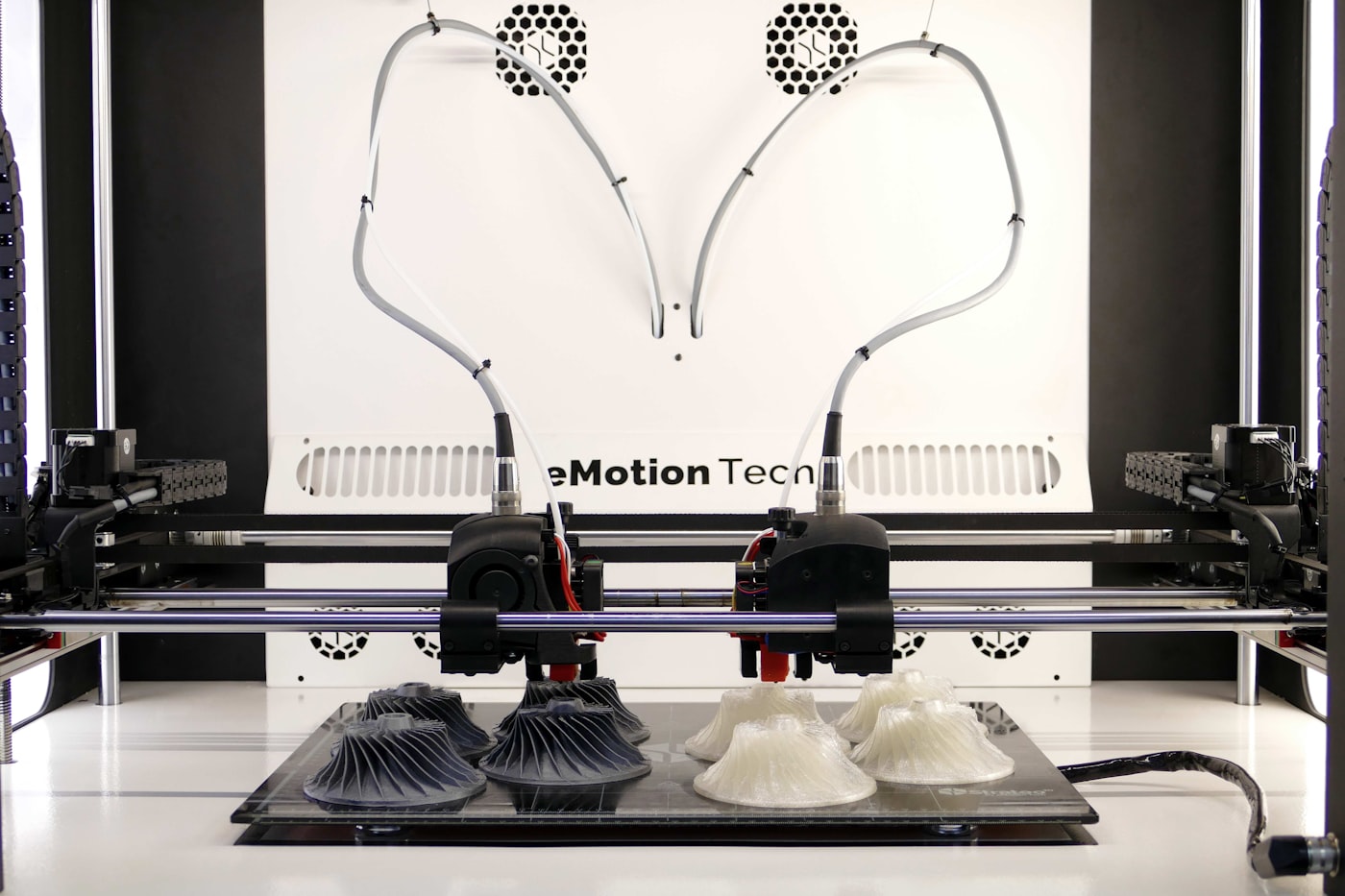
Manufactured polymer parts on a production line, representing appliance engineering and manufacturing
Both companies compete heavily on proprietary motor and suction engineering, filing patents to protect their technology.
Round 04

Leadership & Corporate Strategy

Dyson has cycled through leadership relatively often for a company its size: Jim Rowan led it for nearly eight years before departing in 2023, Roland Krueger took over in early 2024, and then handed the CEO role to Hanno Kirner, a former Jaguar Land Rover and Rolls-Royce executive, in February 2024. Sir James Dyson remains Founder and Chief Engineer, still shaping the company's direction from the chairman's seat.

SharkNinja's Mark Barrocas joined the company in 2008 as president and has led it as CEO for roughly a decade, giving SharkNinja far more leadership continuity through its 2023 spinoff from JS Global and its subsequent growth as a public company. Winner: SharkNinja. Long-tenured, stable leadership through a major corporate transition is a real advantage that Dyson's more frequent CEO turnover doesn't match.

Round 05

Product Innovation & Patents

Dyson pours a large share of revenue into in-house R&D at its Hullavington and Malmesbury campuses, and has aggressively defended its cyclone and digital-motor patents in court over the years. It also funds the Dyson Institute of Engineering and Technology and the James Dyson Award to cultivate future engineers, reinforcing a genuine deep-tech identity.

SharkNinja runs a famously fast "creative destruction" product cycle, shipping a high volume of new SKUs every year across categories — the Ninja CREAMi and Foodi lines are recent examples that went viral largely through word of mouth rather than heavy R&D spend. Winner: Dyson, for depth of proprietary engineering and patent defense, though SharkNinja wins on sheer speed of bringing new ideas to market.

Round 06

Marketing Campaigns & Advertising

Dyson's marketing leans on technical demonstration — engineers explaining airflow and filtration on camera, in-store "demo" tables where shoppers try the suction themselves, and a premium tone that rarely discounts. It's a slower-burn, trust-building style of advertising.

SharkNinja built its marketing muscle in direct-response TV and home shopping channels, and has translated that instinct into modern virality: its products regularly trend on TikTok, and in 2025 SharkNinja was featured as a sponsor in the Brad Pitt racing film F1. Winner: SharkNinja. Its ability to turn a $60 kitchen gadget into a genuine cultural moment on social media is a marketing feat Dyson's more restrained approach doesn't attempt.

Round 07

Sustainability Initiatives

Dyson has invested in recycling technology and repairability across its product line and funds engineering education through the James Dyson Foundation, though the company also faced real scrutiny in 2022 over forced-labor allegations at a Malaysian manufacturing supplier, which it responded to by terminating the contract.

SharkNinja has made more modest, less publicized commitments around packaging reduction and responsible sourcing as part of its broader corporate responsibility reporting as a public company. Winner: Tie. Neither company has a sustainability program with the scale or track record of some other consumer categories, and Dyson's stronger engineering-recycling investments are offset by its 2022 supply-chain controversy.

Plastic bottles collected for recycling, representing corporate sustainability and materials programs
Both brands face growing pressure to address recyclability and repairability in their appliance lineups.
Round 08

Global Retail Footprint

Dyson operates roughly 450 of its own demo stores across more than 80 countries, letting shoppers try before they buy — a deliberately premium, controlled retail experience that reinforces its higher price points.

Shark takes the opposite approach: mass distribution through Walmart, Target, Costco, Best Buy and Amazon, with no significant network of owned stores, but far broader physical and digital shelf presence as a result. Winner: Shark. Reaching shoppers everywhere they already shop — rather than asking them to visit a dedicated store — gives Shark a much wider practical footprint, even without Dyson's polish.

Round 09

Digital Ecosystem & Apps

Dyson ties its connected purifiers, vacuums and lights together through the MyDyson / Dyson Link app, giving owners air-quality data, cleaning maps and firmware updates from a single, fairly unified account across a narrower product range.

SharkNinja spans two very different worlds — cleaning and cooking — so it runs separate apps for each: the Shark Clean app for robot vacuums, and individual Ninja apps like the CREAMi and Foodi companion apps for recipes and settings. Winner: Dyson, for a more cohesive single-account digital experience, even though SharkNinja's split apps make sense given how different its two brands are.

Round 10

Corporate Culture & Workplace

Dyson's engineering campus at Hullavington Airfield — a former RAF base — includes a runway used for testing, and the company runs the Dyson Institute of Engineering and Technology, a degree apprenticeship program that lets students earn a salary and an engineering degree simultaneously while working on real products.

SharkNinja's Needham, Massachusetts headquarters is described internally around a "ninja" mentality of constant reinvention and fast product cycles, without a comparable education or campus program. Winner: Dyson. Its institutional investment in training the next generation of engineers gives it a more distinctive, mission-driven workplace identity.

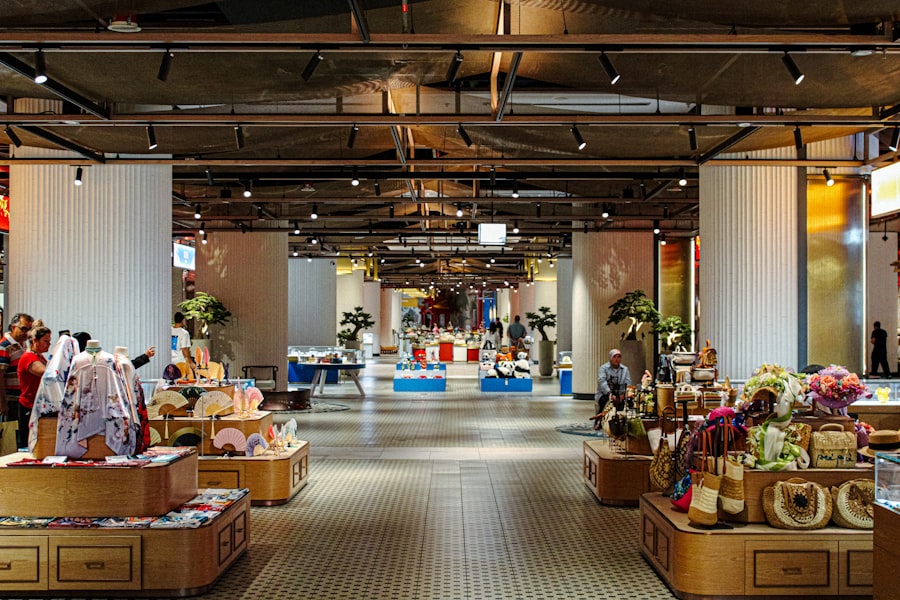
People walking through a shopping mall, representing global retail presence
Shark leans on mass retail partners for reach, while Dyson controls more of its own point-of-sale experience.
Round 11

Financial Health & Stock Performance

As a private company, Dyson doesn't disclose profit figures the way public companies must, and its roughly flat 2025 revenue suggests a maturing core business that's being propped up by newer categories like hair care and air purification, alongside real cost pressure from global tariffs and manufacturing shifts across Asia.

SharkNinja, by contrast, is fully public on the NYSE under ticker SN, posted 2025 revenue of $6.4 billion (up ~16%), and has shown strong quarterly profit growth — operating income up more than 60% and net income more than doubling year-over-year in its second quarter of 2025 filings. Winner: SharkNinja. Public-market transparency plus double-digit growth and expanding margins makes for a clearly stronger financial trajectory right now.

Round 12 — Final

Overall Brand Reputation

This is the round that's genuinely hardest to call. Dyson is still, by most measures, the more prestigious engineering brand — deeper proprietary technology, a controlled retail experience, an actual institute training future engineers, and pricing power that lets it charge a real premium. But it's also privately held, roughly flat on revenue, and facing real cost pressure it doesn't have to disclose in detail.

Shark, through parent company SharkNinja, is the company with momentum and range right now: faster revenue growth, a public stock investors can actually evaluate, viral cultural relevance, and a portfolio that spans well beyond vacuums into kitchens and beauty. If you're judging by engineering pedigree and prestige, Dyson wins. If you're judging by growth, transparency and cultural reach, SharkNinja is having the better run.

Both remain formidable, growing companies competing for the same shelf space and the same living rooms. Read more brand comparisons on our comparison tool or browse other coverage on our blog. Round result: it depends on what you're measuring.

The final scoreboard

12 rounds comparing Dyson and Shark as companies. Both brands won meaningful categories. Here's how they stacked up.

Dyson
★ Round Winner
5
Round wins · 3 ties
  • 01 · History✓ Win
  • 02 · Identity & Design✓ Win
  • 03 · Revenue & Position✓ Win
  • 04 · LeadershipLoss
  • 05 · Innovation & Patents✓ Win
  • 06 · MarketingLoss
  • 07 · SustainabilityTie
  • 08 · Retail FootprintLoss
  • 09 · Digital Ecosystem✓ Win
  • 10 · Culture✓ Win
  • 11 · Financial HealthLoss
  • 12 · ReputationTie
VS
Shark
4
Round wins · 3 ties
  • 01 · HistoryLoss
  • 02 · Identity & DesignLoss
  • 03 · Revenue & PositionLoss
  • 04 · Leadership✓ Win
  • 05 · Innovation & PatentsLoss
  • 06 · Marketing✓ Win
  • 07 · SustainabilityTie
  • 08 · Retail Footprint✓ Win
  • 09 · Digital EcosystemLoss
  • 10 · CultureLoss
  • 11 · Financial Health✓ Win
  • 12 · ReputationTie

The final verdict: Dyson edges ahead, but Shark is closing fast

The Dyson and Shark comparison lands 5-4 in Dyson's favor, with 3 ties across our 12 rounds, and that reflects reality reasonably well: Dyson remains the more prestigious, more engineering-driven brand with deeper proprietary technology and a controlled retail experience — but it's also privately held, and roughly flat on revenue. Visit dyson.com to explore more.

But here's the part most head-to-heads skip: Shark, through parent company SharkNinja, is having the stronger business year. It wins on leadership continuity, marketing virality, retail reach, and financial growth — a public company posting double-digit revenue growth and expanding profit margins, fully visible to anyone who checks its filings. Visit sharkclean.com to explore more.

Which brand you'd call the "winner" depends entirely on whether you're measuring engineering prestige and pricing power, or growth and momentum. Read more brand comparisons on our comparison tool or browse other coverage on our blog.

Frequently asked questions

The questions readers ask most often about the Dyson vs Shark rivalry.

Which is bigger, Dyson or Shark?

Dyson is somewhat bigger, but the gap is closing. Dyson reported roughly £6.1 billion ($8.2 billion) in 2025 revenue as a private company, while SharkNinja — Shark's publicly traded parent — posted $6.4 billion in 2025, up nearly 16% year-over-year. Dyson remains the more premium, higher-margin brand; SharkNinja is growing faster.

See more on each company at dyson.com or sharkclean.com.

Is Dyson owned by the same company as Shark?

No. Dyson Limited is an entirely separate, privately held company founded by Sir James Dyson. Shark is a brand owned by SharkNinja, Inc., a publicly traded company (NYSE: SN) that also owns the Ninja kitchen-appliance brand. The two companies compete directly but have no ownership relationship.

Why did SharkNinja become a public company?

SharkNinja was previously a subsidiary of JS Global Holdings, an investment company, and accounted for nearly half of JS Global's revenue by 2018. On July 31, 2023, SharkNinja completed its separation from JS Global and began trading independently on the New York Stock Exchange under the ticker "SN," giving it direct access to public capital markets.

Who owns Dyson, and where is it headquartered?

Dyson remains privately owned by the Dyson family; Sir James Dyson is Founder and Chief Engineer, while Hanno Kirner has served as CEO since February 2024. The company moved its global headquarters from Malmesbury, England to Singapore in 2019 to be closer to its Asian manufacturing and supply chains, though its main engineering campus remains in the UK.

Which company has better sustainability credentials, Dyson or Shark?

It's close to a toss-up. Dyson has invested in recycling-oriented engineering and funds education through the James Dyson Foundation, but faced real criticism in 2022 over forced-labor allegations at a Malaysian supplier, which it addressed by ending the contract. SharkNinja publishes standard public-company ESG disclosures around packaging and sourcing but hasn't built a flagship sustainability program to match.

Get our weekly buying guides

Honest comparison reviews like this one, plus the best deals on the products we test. No spam, ever — unsubscribe in one click.