Apple Watch Series 11 vs. Galaxy Watch8: Which Smartwatch Wins?

We compared both flagship smartwatches across 12 head-to-head rounds using official specs and published reviews. The winner depends less on the spec sheet and more on the phone in your pocket.

PP
Price & Pick Editors
Wearables Desk · Built from official specs & published reviews
12 rounds 3 sources cited

Every so often, two flagship wearables land within a few dollars of each other and pull in completely different directions. This is one of those matchups. The Apple Watch Series 11 and the Galaxy Watch8 are both premium smartwatches with always-on OLED displays, ECG and sleep tracking, GPS, and swim-proof builds — but they are built around fundamentally different philosophies of what a smartwatch should be.

Apple's watch is the clinically minded, iPhone-only option with titanium styling, hypertension alerts and fast charging. Samsung's watch is the brighter, tougher, longer-lasting and cheaper one, with Gemini AI and body-composition sensing for Android phones. To keep this honest, we did not invent lab numbers: every claim below comes from official specifications or published comparisons by Profesionalreview, MacTech and Smartprix.

This isn't a "spec sheet showdown". Spec sheets don't tell you which watch you'll actually enjoy wearing. What follows is 12 rounds of head-to-head battles across the categories that matter — design, display, performance, battery, charging, durability, health, fitness, software, price, ecosystem, and the one thing that decides the whole result. For more wearables, browse our Electronics category page.

Apple Watch Series 11

  • Display Retina LTPO OLED, 2,000 nits
  • Chip Apple S10
  • Sizes 42mm / 46mm
  • Materials Aluminum / titanium
  • Battery Up to 24 hrs (38 hrs Low Power)
  • Charging 0–80% in about 30 min
  • Water resistance 50 m
  • Health ECG, hypertension alerts, Sleep Score
  • Works with iPhone only
  • Starting price $399

Samsung Galaxy Watch8

  • Display Super AMOLED, 3,000 nits
  • Chip Exynos W1000 (3nm), 2GB RAM
  • Sizes 40mm / 44mm
  • Materials Armor Aluminum, sapphire glass
  • Battery Up to 30 hrs (40 hrs without AOD)
  • Charging 10 W wireless
  • Water resistance 5 ATM + IP68 + MIL-STD-810H
  • Health BioActive Sensor, Vascular Load
  • Works with Android 12+
  • Starting price $349
Round 01

Design & Build

The Apple Watch Series 11 is available in 42mm and 46mm cases, in aluminum or Grade 5 titanium, with a rectangular, rounded-corner Retina LTPO OLED display that remains one of the most recognisable shapes in wearables. Titanium models add a sapphire crystal, while the aluminum ones use Ion-X glass.

The Galaxy Watch8 comes in 40mm and 44mm sizes with a squircle-shaped Armor Aluminum case. It is a handsome watch, but it offers a single case material. For choice of materials and premium finish, Apple wins this round.

Round 02

Display

The Galaxy Watch8 pulls ahead here. Its Super AMOLED panel reaches 3,000 nits peak brightness, compared with 2,000 nits on the Apple Watch Series 11. Profesionalreview notes that this gives Samsung a real advantage in direct sunlight, which matters for runners and cyclists checking stats outdoors.

Both screens are excellent and always-on, with sharp pixel density of roughly 326 ppi on each, so indoors you will struggle to tell them apart. Apple offers a slightly taller display on its larger case. Round result: Galaxy Watch8, on outdoor brightness.

Round 03

Performance & Chip

Apple powers the Series 11 with its S10 system-in-package, while Samsung uses a 3nm Exynos W1000 with 2GB of RAM. Both feel quick for everyday tasks: opening apps, scrolling notifications, tracking workouts and handling voice commands.

Smartprix lists 64GB of storage on the Apple Watch and 32GB on the Galaxy Watch8, which is plenty for offline music and maps on either. In day-to-day use the performance difference is hard to feel, so this round is a tie.

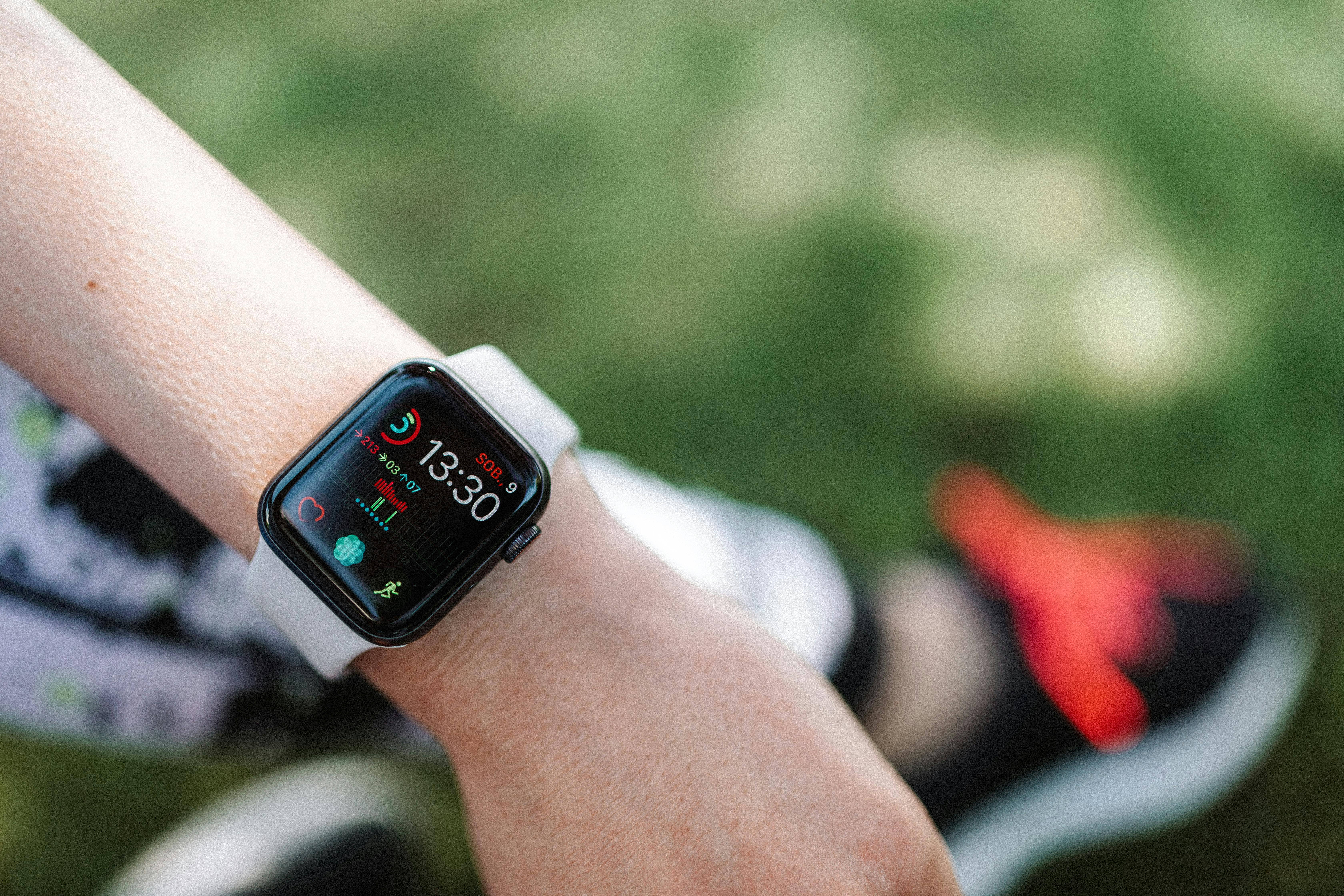
Apple Watch on a wrist — display and performance are close between the Apple Watch Series 11 and Galaxy Watch8
Display brightness and everyday speed: Samsung is brighter outdoors, while performance is a near tie.
Round 04

Battery Life

Samsung wins on endurance. The Galaxy Watch8 is rated for up to 30 hours with the always-on display and up to 40 hours without it, from a 325 mAh (40mm) or roughly 425–435 mAh (44mm) battery. In practice, that translates to about a day and a half of moderate use.

The Apple Watch Series 11 is rated for up to 24 hours of normal use, stretching to 38 hours in Low Power Mode. That is enough to get through a day and a night of sleep tracking with a top-up, but it does not match Samsung's staying power. Round result: Galaxy Watch8. See more wearables on our Electronics category page.

Round 05

Charging Speed

Apple has the clear lead on charging. Profesionalreview reports that the Apple Watch Series 11 charges from 0 to 80% in about 30 minutes, which makes a short top-up before bed practical for sleep tracking.

The Galaxy Watch8 charges wirelessly at around 10 W, and Samsung does not publish quick-charge times. It supports wireless charging, but it is the slower of the two. Round result: Apple Watch Series 11.

Round 06

Durability & Water Resistance

The Galaxy Watch8 is built like a tool watch. It carries 5 ATM water resistance, IP68 dust protection and MIL-STD-810H military-grade durability certification, with a sapphire crystal on every model. That covers swimming, hiking and rough handling.

The Apple Watch Series 11 is rated for 50 metres of water resistance and swimming, and is dust resistant, but Apple does not advertise MIL-STD certification, and only titanium models get sapphire. Round result: Galaxy Watch8, on certified toughness.

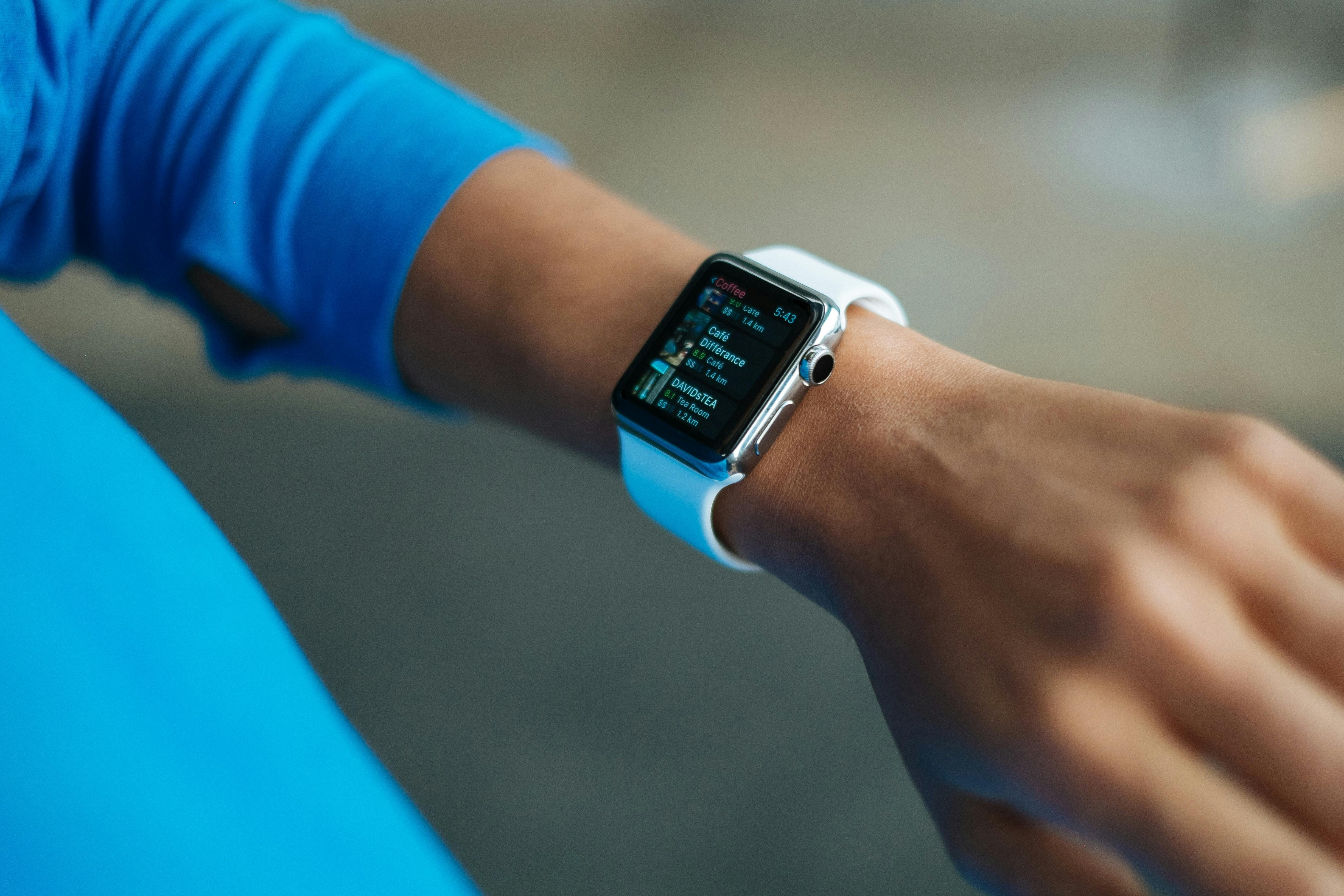
Person wearing a smartwatch with a white strap — battery life comparison between Apple Watch Series 11 and Galaxy Watch8
Battery life: up to 24 hours on the Apple Watch versus up to 30 hours on the Galaxy Watch8 with the always-on display.
Round 07

Health & Safety

Apple takes a clinically oriented approach. According to MacTech, the Apple Watch Series 11 adds hypertension notifications and a Sleep Score, building on its ECG app for atrial fibrillation, sleep apnea detection, blood oxygen and temperature sensing. These are the features that most clearly feel like medical-grade tools.

Samsung leans fitness-first, and its health suite is broader than it first looks, but some features, including blood pressure monitoring, are reportedly reserved for Galaxy phones. For a watch that doubles as a health screening and safety device, Apple wins this round.

Round 08

Fitness & Body Insights

Samsung leads on body insights. The Galaxy Watch8 uses its BioActive Sensor to measure bioelectrical impedance for body composition — muscle mass and body fat — something the Apple Watch does not offer. It also adds an Antioxidant Index, Vascular Load, Bedtime Guidance and a Running Coach.

Apple has deep workout tracking and its own coaching, but it does not match Samsung's extra wellness data or its dual-frequency GPS support across multiple satellite systems. For fitness-minded users who like numbers, Samsung wins this round.

Round 09

Software & AI

The Galaxy Watch8 runs Wear OS 6 with One UI Watch and ships with Google Gemini, which can handle multi-step requests directly on the wrist. It also supports NFC payments and a deep app library through Google Play.

The Apple Watch runs watchOS and is polished and consistent, with Siri handling voice requests, but it has no equivalent to Gemini's conversational, multi-step assistance. If an AI-capable wrist assistant matters, Samsung wins this round.

Round 10

Price & Value

The Apple Watch Series 11 launched at $399 and, while it is often discounted, it remains the pricier option. The Galaxy Watch8 launched at about $349 for the 40mm Bluetooth model, with LTE versions costing more, and is regularly found cheaper at retailers.

That gap of roughly $50 at list price gets bigger when Samsung runs a deal, and you also get a brighter screen and longer battery for the money. Round result: Galaxy Watch8. Check current offers on our deals page.

Round 11

Ecosystem & Compatibility

The Apple Watch Series 11 works only with iPhone. If you own one, the integration is unmatched: notifications, replies, Apple Pay, unlocking your Mac and seamless iCloud syncing all work out of the box. The profesionalreview comparison calls it the logical premium extension of an iPhone.

The Galaxy Watch8 requires Android 12 or later, and the best experience comes with a Samsung phone, where features like blood pressure monitoring are available. Verdict: Apple wins for iPhone users; Samsung wins for Android users.

Person checking a pulse reading on a smartwatch — health tracking across a full day of wear
Health and wellness around the clock: workouts, sleep, heart rate and body insights.
Round 12 — Final

Real-World Daily Use

This is the round that matters most, and the published reviews agree on how it breaks down. The Apple Watch Series 11 is the more polished, clinically minded smartwatch, with faster charging and titanium styling. The Galaxy Watch8 is the better-value, longer-lasting, tougher and more feature-rich device.

The honest answer is that the phone in your pocket matters more than the spec sheet. If you are already an iPhone user, buy the Apple Watch. If you are on Android, especially a Samsung phone, buy the Galaxy Watch8. Round result: It depends on you.

The final scoreboard

12 rounds of head-to-head comparison. Both watches won meaningful categories. Here's how they stacked up.

Apple
4
Round wins · 2 ties
  • 01 · Design✓ Win
  • 02 · DisplayLoss
  • 03 · PerformanceTie
  • 04 · BatteryLoss
  • 05 · Charging✓ Win
  • 06 · DurabilityLoss
  • 07 · Health✓ Win
  • 08 · FitnessLoss
  • 09 · Software & AILoss
  • 10 · PriceLoss
  • 11 · Ecosystem✓ Win
  • 12 · Daily UseTie
VS
Samsung
★ Round Winner
6
Round wins · 2 ties
  • 01 · DesignLoss
  • 02 · Display✓ Win
  • 03 · PerformanceTie
  • 04 · Battery✓ Win
  • 05 · ChargingLoss
  • 06 · Durability✓ Win
  • 07 · HealthLoss
  • 08 · Fitness✓ Win
  • 09 · Software & AI✓ Win
  • 10 · Price✓ Win
  • 11 · EcosystemLoss
  • 12 · Daily UseTie

The final verdict: Galaxy Watch8 wins on hardware, Apple wins for iPhone users

The Galaxy Watch8 wins the head-to-head 6-4 with 2 ties. It has the brighter display, longer battery life, tougher build, extra fitness sensors, Gemini AI and a lower price. If you use an Android phone, the Galaxy Watch8 from $349 is the better and cheaper smartwatch.

But a clear overall win doesn't mean "better for everyone". The Apple Watch Series 11 charges faster, offers titanium, adds clinical-grade health alerts such as hypertension notifications, and integrates with iPhone in a way no Android watch can. And the two will not work across platforms, so your phone decides most of the choice.

The right watch for you depends on which phone you already own. Read more comparisons on our comparison tool or browse other wearables on our Electronics category page. Sources: Profesionalreview, MacTech, Smartprix.

Frequently asked questions

The questions our readers ask most often when choosing between Apple and Samsung smartwatches.

Should I buy the Apple Watch Series 11 or the Galaxy Watch8?

It mostly comes down to your phone. The Apple Watch Series 11 only works with iPhone, so if you own one it is the obvious choice, with the best integration and the strongest clinical health alerts. The Galaxy Watch8 needs an Android phone and is the better pick there, especially with a Samsung handset.

If you are on Android, the Galaxy Watch8 is also cheaper, brighter, longer-lasting and tougher, so it wins on most hardware measures.

Does the Galaxy Watch8 work with an iPhone?

No. Samsung's watch runs Wear OS 6 and requires Android 12 or later (and more than 1.5GB of RAM on the phone). It will not pair with an iPhone.

Likewise, the Apple Watch Series 11 only works with iPhone. Neither watch can be used across platforms, so choose based on your phone.

Which has better battery life?

The Galaxy Watch8. Samsung rates it for up to 30 hours with the always-on display and up to 40 hours without it. Apple rates the Series 11 for up to 24 hours of normal use, and up to 38 hours in Low Power Mode.

Apple charges faster, reaching about 80% in roughly 30 minutes, which softens the gap if you top up regularly.

Which smartwatch is better for health tracking?

They focus on different things. The Apple Watch Series 11 adds hypertension notifications and a Sleep Score on top of an ECG app, sleep apnea detection and temperature sensing, a clinically oriented toolkit.

The Galaxy Watch8 adds a BioActive Sensor for body composition, an Antioxidant Index, Vascular Load, Bedtime Guidance and a Running Coach. Some of its features, such as blood pressure, are reportedly limited to Samsung phones.

Which is more durable?

The Galaxy Watch8, on paper. It combines 5 ATM water resistance, IP68 dust protection and MIL-STD-810H certification with a sapphire crystal on all models. The Apple Watch Series 11 is rated to 50 metres, and only the titanium models get a sapphire crystal.

Both survive swimming and daily wear easily, so unless you are particularly hard on your watch, either will do.

Which has better AI features?

The Galaxy Watch8 ships with Google Gemini, which can carry out multi-step actions on the wrist. The Apple Watch relies on Siri and does not offer an equivalent conversational assistant.

If you are curious how this will evolve, check back — both Apple and Google update their watch software regularly.

Is the Apple Watch Series 11 worth the extra cost?

If you have an iPhone, usually yes: the premium buys you faster charging, titanium options, hypertension alerts and the best phone integration. The Series 11 launched at $399 compared with about $349 for the Galaxy Watch8, and Apple's watch is often discounted too.

Look for sales on our deals page before paying full price on either watch.

What are the display differences?

Samsung's Super AMOLED panel reaches 3,000 nits, versus 2,000 nits for Apple's Retina LTPO display. That makes the Galaxy Watch8 easier to read in direct sunlight.

Indoors both look sharp, at around 326 ppi, with always-on display modes, so the difference only shows up in bright conditions.

What sizes and materials are available?

The Apple Watch Series 11 comes in 42mm and 46mm sizes, in aluminum or titanium, with GPS or GPS plus cellular. The Galaxy Watch8 comes in 40mm and 44mm sizes, in aluminum only, with Bluetooth or LTE versions.

If you want a premium material like titanium, Apple is the only one of the two that offers it.

Get our weekly buying guides

Honest comparison reviews like this one, plus the best deals on the products we cover. No spam, ever — unsubscribe in one click.